
For the first time in history, the Labour Party faced a catastrophic defeat, losing its once-stronghold in Wales, marking the worst electoral loss in generations. This disaster was compounded by the rise of smaller parties like the Green Party, which made significant gains, and the Reform Party, which saw a strong surge in support. In the aftermath, numerous rebellious MPs wasted no time in pointing the finger at Keir Starmer, blaming him for the party’s disastrous performance. Yet, despite the mounting pressure and criticism from within his own ranks, Starmer, instead of offering an explanation or response, remained oddly silent, a move that many found perplexing and suspicious.

The party’s troubles deepened as it was not only routed in England, but also suffered severe losses in Wales and Scotland. Loyalist ministers and MPs were quickly deployed in a frantic attempt to salvage Starmer’s leadership, as the ranks of dissatisfied backbenchers began to swell, with many demanding his resignation. So far, no members of his Cabinet have publicly joined the revolt, but many believe that if they were to do so, it would signal the end of Starmer’s leadership.
Figures such as Rachel Reeves and David Lammy offered their full support for Starmer, but the silence from other key Labour figures—like Wes Streeting, Yvette Cooper, Ed Miliband, and Shabana Mahmood—spoke volumes. This lack of unity and open endorsement from senior members of the party only served to heighten the sense of division within Labour.
Adding fuel to the fire, the Welsh Labour leader, Baroness Morgan, who herself lost her seat, saw the party’s once-dominant position in Wales crumble as Labour’s share of the 96-member Senedd was slashed to a mere nine seats. She used her defeat to publicly criticize the UK Government, suggesting that it needed to change its direction. This loss was particularly humiliating, given that Wales had long been considered a Labour stronghold, a territory the party had dominated for generations. Similarly, Scottish Labour leader Anas Sarwar also acknowledged defeat at Holyrood, stating that Labour had “lost the argument” and once again placing the blame squarely on Starmer.
Meanwhile, the Green Party dealt a significant blow to Labour in London, winning mayoral races in traditionally Labour-held boroughs like Hackney and Lewisham. These results signaled an ominous future for the party, with further losses expected in other key areas. Even in Camden, Starmer’s own constituency, his candidate was defeated by Zack Polanski’s Green Party rival.

The Reform Party also made sweeping gains, seizing control of councils in Sunderland, Gateshead, South Tyneside, Barnsley, and St Helens—once solid Labour territories. Reports even suggested that Birmingham, another Labour stronghold, was on the brink of falling. Reform’s rapid rise, particularly in areas that had traditionally voted Labour, left the party facing a grim future, with its national vote share estimated at a record low of 15 percent. If this trend were to continue, nearly 300 Labour MPs could be in danger of losing their seats in the next general election.
Veteran Labour MP Graham Stringer expressed his concerns, stating that Starmer had become “despised on the doorstep,” a sentiment echoed by ex-Cabinet minister Louise Haigh, who bluntly stated that Starmer could not lead the party into another election unless the Government urgently changed its approach. Several other MPs, including Anneliese Midgley, Sarah Owen, and Connor Naismith, delivered similar calls for new leadership. Stroud MP Simon Opher warned that if the party did not change leadership before the next election, it would face a “slaughter,” while Sheffield Hallam MP Olivia Blake called for an “orderly transition” away from Starmer’s leadership.
The pressure on Starmer was also mounting from the unions, with leaders of Labour-affiliated unions such as the TSSA, Unison, and Unite calling for a change in leadership and a complete overhaul of the party’s approach. These organizations, which had been vital supporters of the party for years, now saw the need for a drastic shift to avoid what they described as a “catastrophe” for Labour.
Despite the intensifying revolt, No. 10 Downing Street launched a desperate campaign to rally support for Starmer. Science Secretary Liz Kendall appeared on BBC News, attempting to quash the mutiny, asserting that Starmer would not step down and that he had no plans to set a timetable for his departure. Her words, however, seemed to do little to reassure the anxious Labour ranks, who were increasingly frustrated with Starmer’s leadership.
Starmer himself admitted that the situation was “tough” and acknowledged that “unnecessary mistakes” had been made during the election campaign. However, he insisted that he would not “walk away,” pledging to make announcements in the coming days that would show the public that things would improve. His reassurances, though, fell flat with many within the party, with some branding him as “Robot Keir” for his failure to connect with voters and failings in leadership.
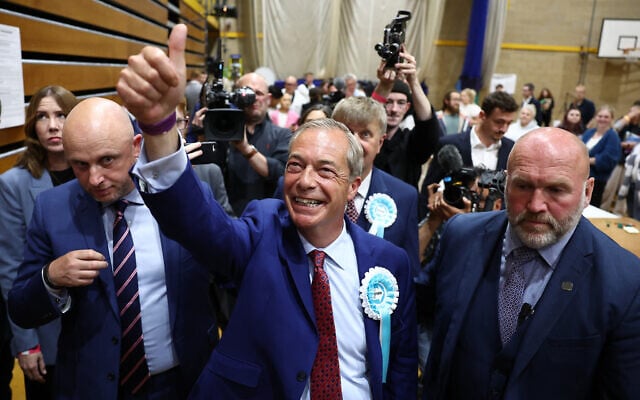
In a lighter moment amid the turmoil, Nigel Farage, leader of the Reform Party, boasted of what he described as a “historic shift in British politics,” claiming that his party’s gains were a sign that the two-party system was being replaced. Farage even joked that he would be “very sad” to see Starmer ousted, as he believed Starmer’s continued leadership was the Labour Party’s greatest asset.
As Britain’s political landscape shifts dramatically, it seems Labour is facing a potentially irreversible collapse. National vote share projections suggested that at the next Westminster election, Labour could secure only 15 percent of the vote, with Reform topping the poll at 27 percent. In this scenario, a hung Parliament could emerge, with Reform emerging as the largest party but still far from securing an outright majority.
Labour’s internal fractures continue to deepen, with figures like Angela Rayner facing their own challenges in securing Labour’s future, while doubts persist over whether key figures like Andy Burnham could ever make a successful return to Parliament. Even the Tories, despite their own struggles, were able to secure several victories, including control of Westminster from Labour and a clean sweep in Harlow. The Greens also made further inroads, seizing control of Norwich council in a significant victory.

As the Labour Party grapples with its worst crisis in modern history, the future of Sir Keir Starmer’s leadership remains uncertain. With each passing day, the pressure intensifies for him to make difficult decisions about his future, as the party teeters on the edge of political irrelevance.


