
WOW: Sally Field’s Most Moving Screen Return Is Officially Netflix’s Next Massive Obsession! 

In a time when audiences are overwhelmed by fast-paced entertainment and nonstop negativity, one quiet film is connecting with millions of people in a deeply emotional way.
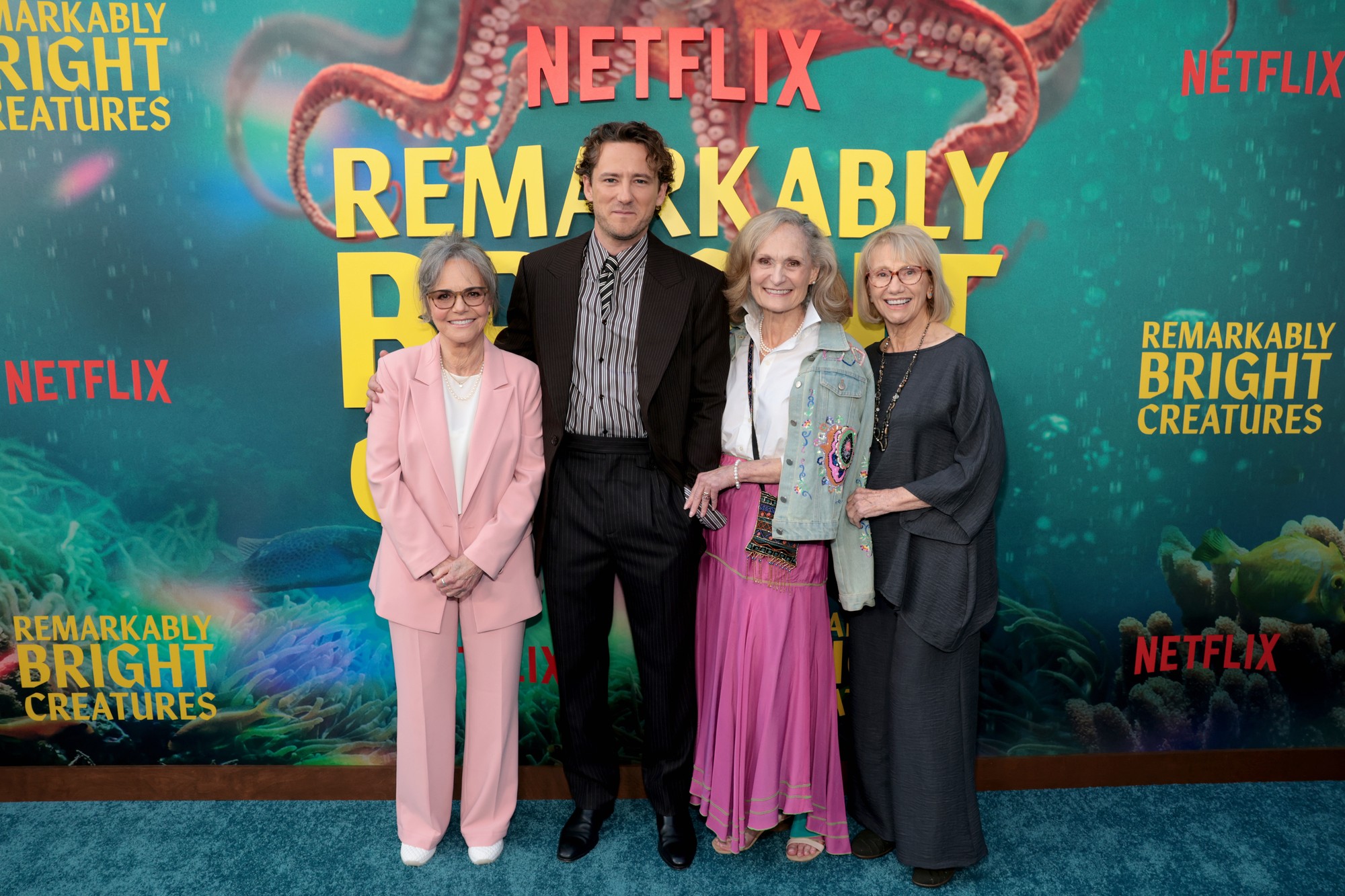
Remarkably Bright Creatures has rapidly become one of the most talked-about emotional dramas of the year, drawing praise for its heartfelt storytelling, reflective themes, and powerful exploration of humanity’s fragile relationship with the natural world.
Led by the legendary Sally Field, the film combines grief, compassion, emotional healing, and environmental reflection into a story that many viewers are calling “exactly what the world needs right now.”
Social media reactions have flooded online platforms, with audiences describing the movie as “healing,” “beautifully human,” and “unexpectedly life-changing.”
And at the center of the conversation is one surprising emotional force:
An octopus named Marcellus.
A Story About More Than Grief
While the film initially appears to focus on personal loss and loneliness, audiences quickly discover something much deeper unfolding beneath the surface.
Field plays Tova Sullivan, an aging widow quietly carrying decades of emotional pain after the disappearance of her son and the recent death of her husband. Working night shifts at a small aquarium, Tova lives a life shaped by routine, silence, and unresolved grief.
Then she encounters Marcellus — a remarkably intelligent Giant Pacific octopus who observes the humans around him with wit, curiosity, and surprising emotional insight.

What follows is not simply a friendship.
It becomes a meditation on connection itself.
Through small interactions, quiet conversations, and deeply emotional moments, the film explores how living creatures — human and animal alike — can help heal wounds that once felt impossible to overcome.
Sally Field Says the Role Became Deeply Personal
Much of the emotional power behind the film comes from Sally Field’s performance, which many critics are already describing as one of the most touching roles of her career.
But according to Field herself, the story affected her personally long before audiences saw the finished film.
In interviews surrounding the project, Field reflected on how the movie became a tribute not only to emotional healing, but also to the beauty and vulnerability of ocean life itself.
She reportedly spoke openly about growing concerns surrounding pollution, environmental decline, and the devastating loss of marine ecosystems around the world.
For Field, the film’s emotional core extends beyond human relationships.
It is also about learning to respect and protect the living world around us.
That perspective has resonated deeply with audiences who increasingly feel anxious about climate change, environmental destruction, and humanity’s growing disconnection from nature.
Why Marcellus the Octopus Has Captured Hearts Everywhere
Perhaps the film’s greatest surprise is how emotionally attached viewers have become to Marcellus.
Voiced brilliantly by Alfred Molina, the octopus quickly evolves beyond comic relief or fantasy storytelling.
Instead, Marcellus becomes the emotional observer of the human condition.
Through his intelligent narration and thoughtful observations, the film quietly asks powerful questions:
How do humans process grief?
Why do people isolate themselves emotionally?
Can connection still exist in a world filled with loneliness and division?
Marcellus sees humanity from outside the human experience itself, which gives the story a surprisingly reflective and philosophical tone.
And somehow, audiences are finding comfort in that perspective.
A Film That Feels Gentle in a Chaotic World
One reason Remarkably Bright Creatures is connecting so strongly with viewers is its emotional restraint.
The film does not rely on shocking twists, nonstop drama, or overwhelming tragedy.
Instead, it embraces stillness.
Quiet conversations.
Small acts of kindness.
Moments of understanding.
That softer emotional approach feels increasingly rare in modern entertainment.
Many viewers online have described the film as “a reminder to slow down” and “a story that restores faith in people.”
Others say the movie helped them reflect on their own relationships, grief, and emotional struggles in ways they did not expect.
Environmental Themes Without Heavy-Handed Messaging
Another reason the film stands out is how naturally it weaves environmental reflection into the story without becoming overly political or preachy.
Rather than delivering direct lectures, the movie encourages empathy through emotional experience.
The aquarium setting becomes symbolic of something larger:
A fragile world struggling to survive.
Through Marcellus and the ocean imagery surrounding him, the film quietly highlights the beauty of marine life while reminding audiences how vulnerable those ecosystems have become.
Field’s comments about pollution, environmental decline, and disappearing sea life only deepened those themes for many viewers.
But importantly, the film never loses hope.
That hopeful tone may be the movie’s greatest strength.
Hope Becomes the Film’s Most Powerful Message
Despite its themes of grief, aging, loss, and environmental anxiety, Remarkably Bright Creatures never becomes emotionally hopeless.
Instead, the story insists that healing remains possible.
Not through grand gestures.
But through compassion.
Understanding.
Friendship.
And small moments of human connection.
That emotional optimism has become one of the biggest reasons audiences continue recommending the film to others online.
At a time when many people feel emotionally exhausted by modern life, viewers appear deeply moved by a story willing to believe in kindness again.
Critics and Audiences Are Responding Emotionally
The response from both critics and audiences has been overwhelmingly positive.
Many reviewers praised the film’s emotional sincerity and mature storytelling. Others highlighted the performances, particularly Field’s ability to convey heartbreak and warmth simultaneously.
But the strongest reactions may be coming from ordinary viewers themselves.
Social media continues filling with emotional posts from people saying the movie made them cry unexpectedly, call loved ones, or rethink their relationship with nature and the world around them.
That kind of emotional response cannot be manufactured.
It happens when storytelling touches something deeply human.
A Quiet Film Making a Loud Impact
In the end, Remarkably Bright Creatures succeeds because it understands something simple but powerful:
People still crave hope.
They still crave connection.
And they still want stories that remind them compassion matters.
Through ocean life, grief, healing, and unlikely friendship, the film delivers that message with honesty and heart.
And as audiences continue discovering it around the world, one thing is becoming increasingly clear:
Remarkably Bright Creatures is not just another emotional drama.
It is becoming one of the year’s most meaningful cinematic experiences.


