
Andy Burnham tonight refused to rule out raising the top rate of income tax to 50p as he eyes a move to unseat Keir Starmer as Prime Minister. The Greater Manchester mayor, currently Labour’s candidate in the Makerfield by-election, is hoping to return to Westminster and use a win as a springboard for a leadership challenge.

Speaking to Sky News, Burnham described the upcoming contest on June 18 as “the most consequential of our lives,” suggesting it offers a chance to “create a circuit-breaker” and push for “something completely different.” He said the campaign is a bid to build a movement for national political change, citing his record transforming politics in Greater Manchester as a blueprint for what he could achieve at a national level.
When asked about his earlier proposal to introduce a 50p top rate of income tax, Burnham said he is open to “a fairer taxation system,” while also highlighting the need for debate over a land value tax. “At this point in time, I’m listening to what people here are saying to me. I’m doing my best to represent what they’re saying into the national debate,” he added. Burnham has previously suggested a tax cut for lower earners alongside a higher top rate.
Despite the looming leadership question, Burnham stressed that he remains a “team player.” Reflecting on his political upbringing, he said: “I grew up as a team player where you support the manager even if you disagree with his tactics.” Yet he warned that the country is sending a “deafening cry for change,” referencing local election results in places like St Helens and across the country.
If Burnham wins in Makerfield, he is widely expected to challenge Starmer for the Labour leadership, with the ultimate aim of moving into Downing Street. However, he ruled out calling a snap general election if he seizes power, saying his team would “carry on until the next scheduled election,” expected in 2029. This contrasts with his earlier calls for the Conservatives to hold an election following a change of leadership in 2022.

Burnham’s campaign comes as polling suggests a volatile electoral landscape. A recent YouGov poll shows Reform UK, led by Nigel Farage, at 27 per cent nationally, while Labour and the Conservatives are tied on 18 per cent. Analysts warn that if such support were replicated in a snap election, it could give Farage a majority and make any Burnham premiership short-lived, comparable to Liz Truss’s tenure.
Despite the uncertainties, Burnham has been clear he intends to campaign on policies aimed at creating a fairer economic system. He highlighted concerns raised by voters during the by-election about low-income thresholds, noting that many people are “drawn into tax and they don’t get the rewards from the work that they are doing.” He emphasized he is “not making commitments beyond that” for now, preferring to engage with constituents and respond to their concerns in shaping the debate.
Last September, Burnham unveiled an alternative economic plan to the one put forward by Starmer and Chancellor Rachel Reeves. His proposals included reintroducing a 50p top rate of income tax, a move last seen between 2010 and 2013 under Gordon Brown’s government. Alongside this, Burnham suggested measures aimed at easing the tax burden on lower earners.
Burnham’s approach signals a potentially seismic shift for Labour politics, combining policy boldness with a tactical eye on leadership change. He insists the Makerfield vote is more than just a by-election, framing it as a referendum on Labour’s direction and the broader political landscape. “Are we going to listen to it [the call for change] or are we not?” he asked, stressing that the party needs to respond to public sentiment.
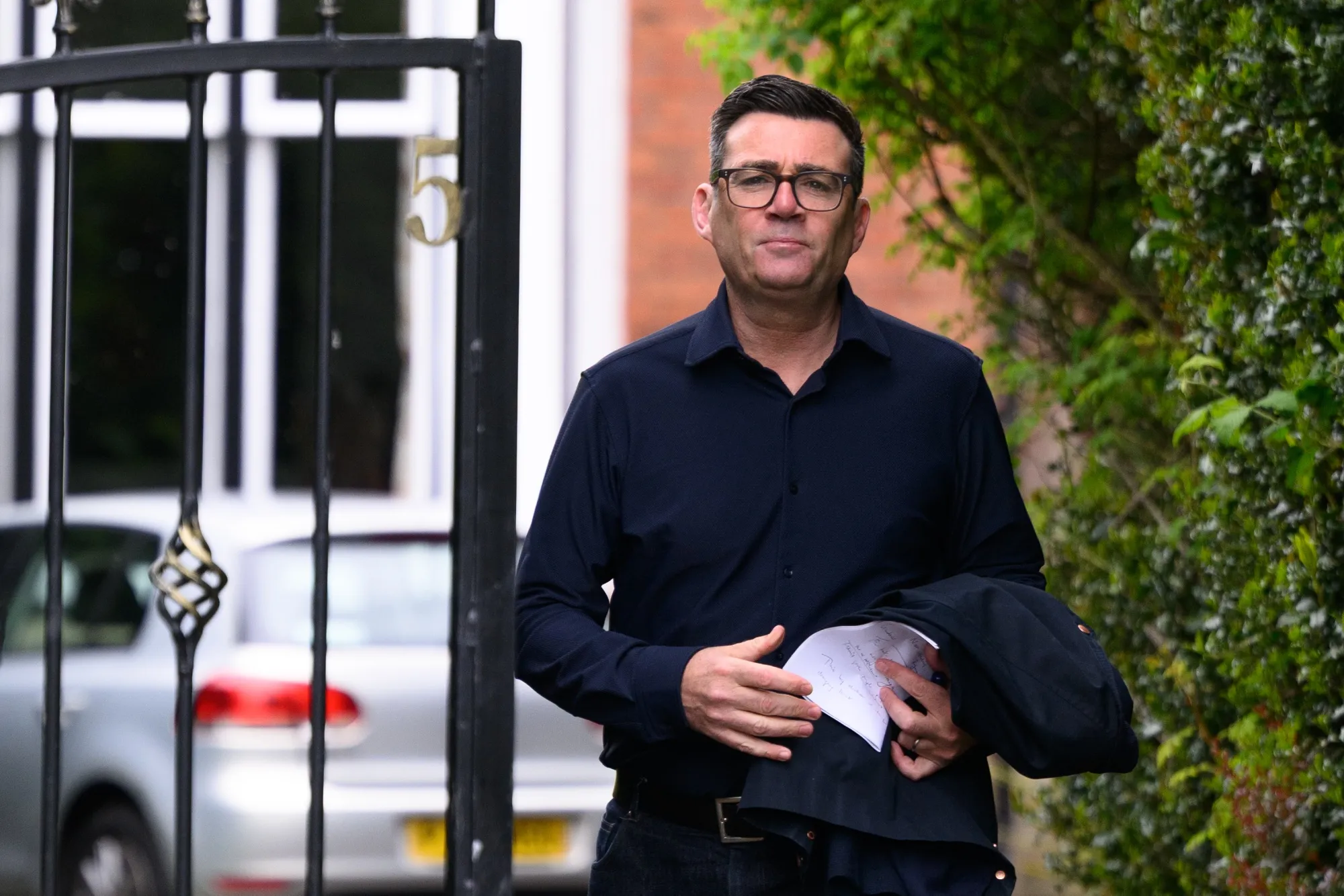
With the by-election just weeks away, Burnham is positioning himself as both a policy innovator and a challenger within Labour, seeking to tap into public appetite for change. His statements on taxation, land value tax, and leadership signal a readiness to reshape debates at Westminster, but he remains cautious, listening to voters and framing his approach as responsive and principled rather than reckless.
The stakes are high: a Makerfield victory could provide Burnham with a national platform to contest Starmer, yet the party faces risks from both internal dynamics and the rising influence of parties like Reform UK. In this tense political climate, Burnham’s strategy is to offer bold ideas while projecting unity, seeking to translate local success into national leadership without triggering early elections or unnecessary upheaval.
Ultimately, Burnham’s campaign is being watched closely, not just by Labour members but by the wider public, as it could redefine the party’s approach to taxation, governance, and leadership. Whether his vision for a “fairer taxation system” and a political movement to challenge the status quo will resonate remains to be seen, but the Makerfield by-election will be a key barometer for the Labour Party’s future direction.


