
A Game of Wits and Missing Mothers
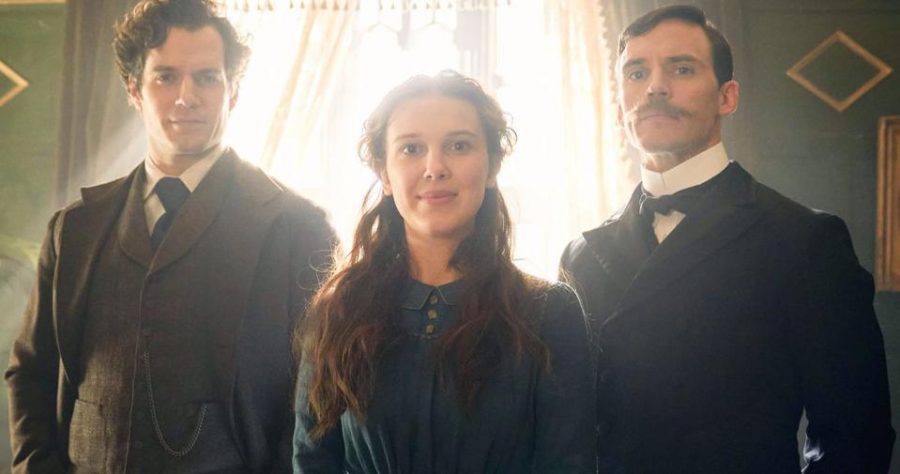
The narrative ignites on Enola’s 16th birthday when she awakens to discover that her eccentric mother, Eudoria (played with signature brilliance by Helena Bonham Carter), has vanished without a trace. The disappearance forces her older brothers—the famous detective Sherlock (Henry Cavill) and the cold, traditional Mycroft (Sam Claflin)—to return home after years of estrangement.
Deducing that Eudoria has no intention of returning, Mycroft plots to ship Enola off to a rigid finishing school to mold her into a “proper” lady. However, the night before her departure, Enola decodes a series of clever clues left by her mother, discovers a hidden cache of money, and escapes into London disguised as a boy.
Her personal quest takes a dramatic detour when she crosses paths with the runaway young Marquess Tewkesbury (Louis Partridge). Enola pivots to help the young lord evade dangerous forces and claim his rightful seat in Parliament, establishing herself as a formidable investigator in her own right.

Subverting Traditional Hollywood Tropes
Though the film carries a PG-13 rating due to its dynamic action and combat sequences, Enola Holmes shines brightest as an empowering, family-friendly historical romp. The film earns widespread praise for several refreshing departures from standard cinematic formulas:
-
Authentic Casting: Millie Bobby Brown brilliantly portrays a 16-year-old character while being the same age during production, performing alongside Louis Partridge, who is just a year older. This subverts Hollywood’s pervasive habit of casting much older actors opposite young women.
-
Zero Sexualization: Despite the intricate, heavy corsetry and costuming of the Victorian era, Enola’s character is never once objectified or sexualized, maintaining focus entirely on her intellect and physical capability.
-
Organic Relationships: While the narrative hints at a genuine, emotional bond between Enola and Tewkesbury—highlighted by a tearful farewell—the script leaves room for a healthy friendship rather than rushing into an unnecessary romantic subplot.
                  ┌──────────────────────────────┐
                  │       EUDORIA HOLMES         │
                  │ (Helena Bonham Carter)       │
                  └──────────────┬───────────────┘
                                 │
         ┌───────────────────────┼───────────────────────┐
         ▼                       ▼                       ▼
┌─────────────────┐     ┌─────────────────┐     ┌─────────────────┐
│ MYCROFT HOLMES  │     │ SHERLOCK HOLMES │     │  ENOLA HOLMES   │
│  (Sam Claflin)  │     │ (Henry Cavill)  │     │(Millie B. Brown)│
└─────────────────┘     └─────────────────┘     └─────────────────┘
A New Angle on the Brothers Holmes
The film offers a fascinating, drastically altered perspective on the iconic Holmes brothers. Sam Claflin’s Mycroft acts as a central antagonist simply by serving as an unyielding voice of the era. He represents a rigid societal system that demands women learn etiquette rather than martial arts or indoor tennis. This flatter, more comedic portrayal allows Claflin to flex different muscles than his previous heartthrob roles in The Hunger Games or Love, Rosie.
Meanwhile, Henry Cavill’s Sherlock is a revolutionary departure from modern interpretations. Unlike Benedict Cumberbatch’s famously blunt, cold, and self-described “high-functioning sociopath” in the BBC’s Sherlock (2010–2017), Cavill’s detective is deeply human, empathetic, and unruled by cold logic.
This emotional evolution peaks during a climactic scene at Scotland Yard. When Inspector Lestrade asks Sherlock how Enola managed to solve the Tewkesbury mystery before him, Sherlock simply smiles and laughs. It marks a profound turning point where he stops viewing Enola as a fragile child and accepts her as an intellectual equal capable of running circles around him—an outcome he genuinely looks forward to. By the film’s end, his choice to become her legal guardian demonstrates that he views his emotional connection to her as a source of strength, rather than a tactical “pressure point.”
The Real-World Legal Battle Over “Emotions”
Ironically, it was Cavill’s warmer, kinder portrayal of the famous sleuth that landed Netflix, Nancy Springer, and Penguin Random House in a bizarre legal battle with the Sir Arthur Conan Doyle estate.
While the vast majority of the original Holmes canon is in the public domain, the estate filed a copyright infringement lawsuit targeting the film. They argued that Sherlock only developed human empathy, a respect for women, and a capacity for true friendship in the final ten stories written after World War I—a period when Conan Doyle was grieving the tragic losses of his son and brother. The estate claimed these specific emotional character traits were protected intellectual property.
The Verdict: The controversial lawsuit was ultimately dismissed with prejudice in December 2020 following a stipulation by all parties, pointing to an off-court settlement. Legal experts heavily criticized the filing, noting that generic human emotions like warmth and kindness cannot be copyrighted.
The Verdict on Enola
The film’s only minor narrative misstep is Enola’s occasional “not-like-other-girls” attitude toward more traditional women, a slightly dated trope that clashes with the otherwise strong, intersectional feminist themes. Beyond that, the film beautifully weaves historical liberation into its plot—featuring references to Mary Wollstonecraft and secret, all-female jiu-jitsu dojos hidden above London tea shops.
Whether you are looking for a two-hour escape from daily stress or a sharp, witty feminist reimagining of classic detective lore, Enola Holmes delivers an immaculate, fast-paced ride well worth the watch.


