
😢 New Jeffrey Epstein Victims Break Down on Capitol Hill — Plead for Trump to Release ALL Files
In a harrowing display of courage and raw emotion, nearly a dozen survivors of the late sex offender Jeffrey Epstein shared their stories on Capitol Hill on Wednesday morning, calling for the immediate release of additional government files detailing the crimes of the disgraced financier and his close associate, Ghislaine Maxwell.
The press conference, hosted by Republican Rep. Thomas Massie of Kentucky and Democrat Rep. Ro Khanna of California, drew hundreds of supporters, all rallying behind the victims in a bipartisan push to demand transparency from the federal government.
Many of the women speaking publicly for the first time recounted chilling experiences that have, until now, remained largely unknown to the public. Among them was Chauntae Davies, a former actress, who revealed that Epstein’s longtime confidante, Ghislaine Maxwell, first introduced her to the financier under the guise of helping her career. What followed, she said, was a disturbing pattern of abuse spanning Epstein’s private homes and his notorious private island.
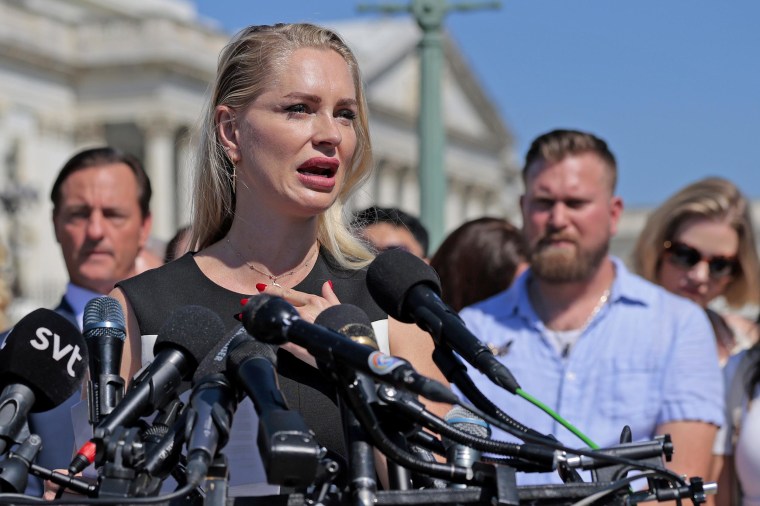
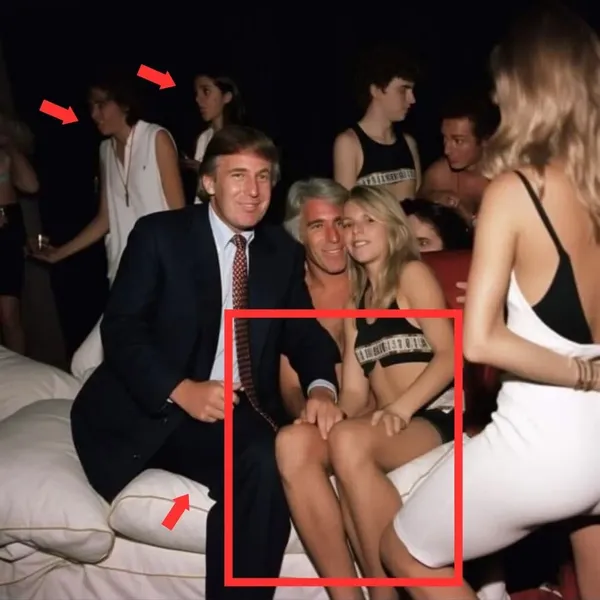
“His biggest brag, forever, was that he was very good friends with Donald Trump,” Davies told reporters, voice shaking. “He had an 8×10 framed picture on his desk of the two of them. They were very close.” She also recalled being taken on trips to Africa alongside former president Bill Clinton and other prominent figures, experiences that left an indelible mark on her life.
Equally heartbreaking was the testimony of Marina Lacerda, 37, identified as ‘Minor-Victim 1’ in Epstein’s 2019 indictment. Lacerda recounted meeting Epstein in 2002, when she was just 14, and being recruited to his Manhattan home under the pretense of giving him a massage — an encounter that would lead to years of sustained abuse.
“The worst part,” Lacerda said, tears streaming down her face, “is that the government is still in possession of documents and information that could help me piece my life back together. They have files with my name on them that were confiscated from Epstein’s house, but I don’t have any of it. And I know the same is true for many of these women.”
The Justice Department provided 33,295 pages of Epstein-related files to the House Oversight Committee in August, some of which were released to the public on Tuesday. However, Rep. Massie criticized the release as insufficient, noting that many of the documents had already been reported, while only a handful of new materials, such as videos of Epstein’s jail unit on the night of his death, were included.
“[The] White House says helping me secure a vote to release all the Epstein files is a ‘Hostile Act,’” Massie posted on social media. “They’re threatening anyone who helps bring true transparency and justice for the survivors. This is a tacit admission the Oversight Committee data release is woefully incomplete.”
The survivors’ testimonies have intensified pressure on GOP leadership, which appears reluctant to allow the bipartisan Epstein bill to reach the House floor. The proposed legislation would compel the Justice Department to release a wider array of documents, including materials that remain classified or undisclosed.
Courtney Wild, another survivor, recounted meeting Epstein at 14 through a friend and later taking legal action at 19. “Sometimes it’s hard to believe that I had to sue the United States just to learn that my abuser was given immunity,” she said. “The only reason anyone knows about the non-prosecution agreement is because our lawsuit forced the government to disclose it.”
Also speaking was Sky Roberts, brother of Virginia Giuffre, a high-profile Epstein survivor who tragically passed away earlier this year. Surrounded by family, Roberts broke down as he urged Congress to implement stronger protections for child trafficking victims and ensure that justice is served for survivors like his sister.
The hearing was also attended by Rep. Marjorie Taylor Greene, R-Ga., who observed Massie and Khanna’s interactions with the survivors, highlighting the bipartisan concern for the victims’ rights. The press conference was punctuated with moments of tears, silence, and the emotional weight of decades of suppressed trauma finally brought to light.
Legal experts say that the release of additional files could not only provide closure for the survivors but also shed light on previously undisclosed connections between Epstein, high-profile political figures, and other influential individuals. Some files are reportedly held within the CIA and possibly the FBI, and Congress is eager to ensure these materials are fully accessible.
“The survivors deserve every piece of information that could help them heal,” said Rep. Robert Garcia, the top Democrat on the House Oversight Committee. “All information released so far was already known. We need full transparency — and that includes any connections to former presidents or other prominent figures.”
Wednesday’s Capitol Hill event marked a turning point in the fight for justice. For survivors like Lacerda and Davies, it was more than a political statement — it was a public reckoning with the painful realities of their past and a demand that the government take action to support their path to healing.
As the survivors’ voices echoed through the halls of Congress, the broader message was clear: decades of secrecy and obfuscation cannot erase the suffering endured by Epstein’s victims. Now, with renewed public scrutiny and bipartisan momentum, there is hope that full disclosure and justice may finally be within reach.
The path to transparency may be long, but for Epstein’s survivors, Wednesday represented a powerful step forward — a stand against a dark chapter in American history, and a demand that no file, no truth, and no survivor be left behind.


