
Many women are turning to social media for cheaper options to pricey IVF which see ‘super-donors’ handing over their ‘baby-dust’ in hotel rooms… as desperate Brits reveal how they have faced shocking abuse

“WHEN do you want to start?” asks a so-called sperm donor on Facebook. “Do you live by yourself? Is it just you? I can be there soon.”
It’s been less than an hour since I posted in one of the many “seeking sperm donor” UK Facebook groups set up for wannabe mums.


I’m posing as a desperate single woman in her thirties, based in the South West, currently ovulating and looking for a donor ASAP.
Within minutes, my post has attracted dozens of comments and likes, mostly from men offering to meet me that same evening.
Most of those who comment are local, but others offer to fly in from places like South Africa and Saudi Arabia to “help”.
It’s not always clear what they’re offering — NI (natural insemination, meaning sex) or AI (artificial insemination, the method legitimate clinics use).
What is clear is how unregulated and dangerous these groups are, and how frightening that can be.
The number of babies born to donor sperm has tripled in the past 15 years as more women go solo or start families with same-sex partners, according to the Human Fertilisation and Embryology Authority.
But with IVF costs sky-high and the NHS covering just a fraction of the treatments, many are turning to social media for cheaper options.
So-called “super-donors” hand over their “baby-dust” in hotel rooms or even women’s homes.
But behind the swarm of positive pregnancy test posts and cute baby pics, desperate women say they have faced scams, sexual harassment and shocking abuse from men.
‘Grim and unsafe’
“I joined Facebook donor groups after struggling with infertility,” says Daisy De, 32, from London. “Within hours, men messaged me offering sex, claiming it would ‘cure’ me. I found the whole process grim and unsafe.”
“Some men were pushy and obsessed with fathering as many babies as possible,” she says. “It made me fear their real motives.”
She soon realised there were legal risks, too. “If a Facebook donor wants access to your child, he can apply for it. It didn’t feel safe.”
Daisy later used a licensed clinic, paying £990 to the London Sperm Bank.
She then turned to a US-based clinic, Xytex, where she would later conceive her daughter.
Now five, Daisy’s little girl is her “miracle”.
Protect yourself. Use a registered donor. Some men online treat it like a fetish
Daisy De
And her advice? “Protect yourself. Use a registered donor. Some men online treat it like a fetish.”


Indeed, I’ve seen first-hand just how unregulated and pushy these men can be. Within minutes of posting in one of the UK’s biggest Facebook donor groups, I received a message from Alistair.
He asks me to DM him — so I do. He boasts how he’s fathered NINE children since 2015 and “prefers natural insemination” — meaning sex.
I tell him I’m nervous and ask: “Isn’t it awkward having sex with someone you don’t know? Like, do you go for a drink first? What if there’s no connection?”
He simply replies: “We can chat and build a connection.”
Minutes later, I spot his name again — this time in a post from another woman in the group warning others to “be careful using this guy”. She claims he’s only after “free sex”.
Of course, I have no intention of meeting him in real life. I’m on this site purely for journalistic purposes, but I can’t help imagining how terrified a woman genuinely trying to conceive would feel using these groups.
“One man wanted me to have a threesome with his girlfriend,” says single mum Laura Coldman, 33, who joined the groups as she wanted to give her son Cole, 13, a sibling.
One man wanted me to have a threesome with his girlfriend
Laura Coldman
She says: “I was overwhelmed by the number of creepy messages.”
After two months, she received a message from an American living in the UK offering his sperm for free.
Laura, from Hinckley, Leics, spent months vetting him and later met him in person. He provided STD test results and a full medical history.
Laura eventually self-inseminated using a syringe at his home, accompanied by a friend for safety.
After four attempts, she fell pregnant, and Calum Anthony Ryan was born on April 21, 2022, weighing 8lb 8oz. Calum, now three, was later diagnosed with autism.
Laura says: “He doesn’t need to talk to show his personality. Calum is perfect the way he is.”
She says she would use the same donor again and advises conducting thorough vetting and checks before using an online donor.
Serial sperm donor Kyle Gordy, 34, an accountant from Los Angeles who now lives in the South West of the UK, claims it is the sperm donors who are the vulnerable ones.
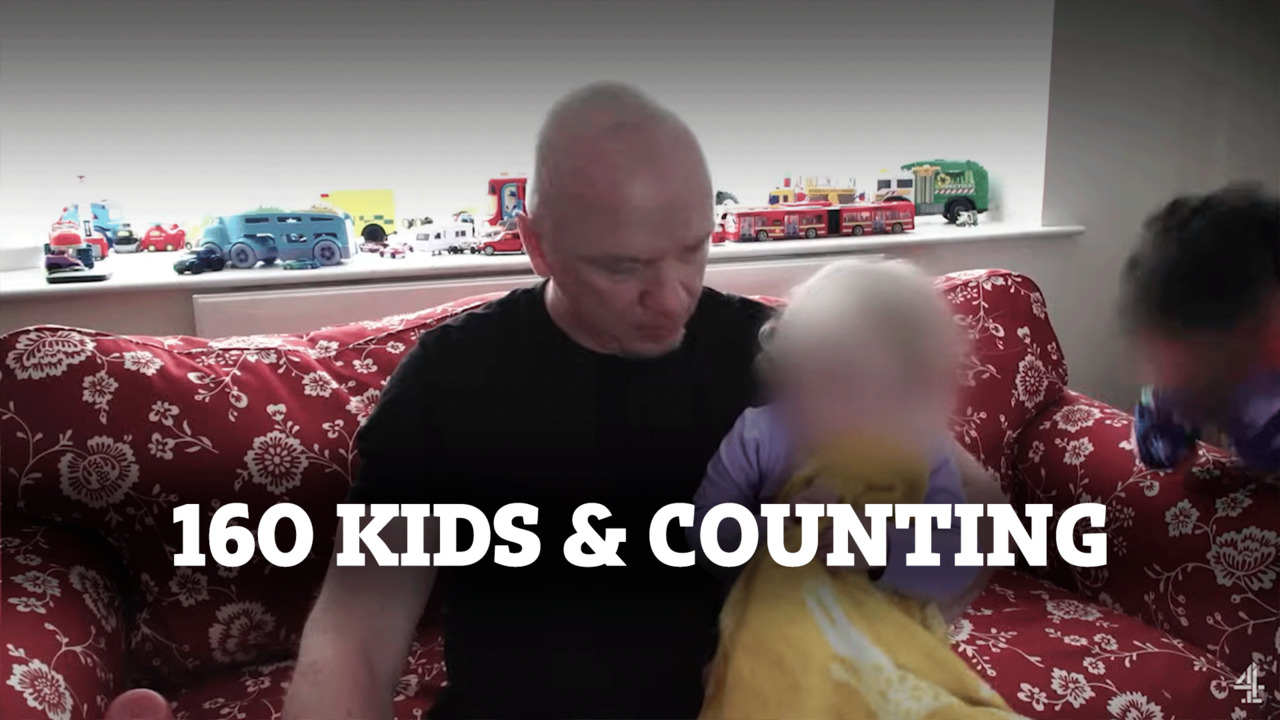
Kyle has fathered 20 kids in the UK and Ireland. He also has children in Australia and the US. He runs two of the biggest sperm donor Facebook groups in the UK.
“People might presume women are being exploited,” he tells me. “But if a guy is creepy, you can block him.
“If you believe someone has committed a crime, go to the police.
“I’ve never had anyone come to me with a police report and I run two public Facebook UK sperm-donating groups. The donors are the vulnerable ones. When you get someone pregnant, you are at her mercy.
People might presume women are being exploited. But if a guy is creepy, you can block him
Serial sperm donor Kyle Gordy
“I’ve seen men left suicidal because the women said they wouldn’t go for child support, and then they do. It ruined their lives.”
Kyle, who claims his sperm count is more than 1.25billion — six to eight times higher than average — tells me how he left the US after a woman tried to come after him for child support.
“We had a written agreement but that meant nothing,” he continues. “A woman can still pursue you legally for child support. My lawyer said to leave the country, so I did.
“One donor friend of mine pays child support for nine of his 25 children — it left him suicidal. Some mums even abandoned their kids, leaving him to take full custody. One mother was out partying every night. He’s in therapy now.”
Kyle, whose children are aged five months to 11 years, confirms that a lot of sperm donors are not genuine and women need to watch out.
‘The kids are gifts’
“Being a donor isn’t easy,” he explains. “I’m in the top one per cent when it comes to fertility.
“I take my health seriously — I eat well, don’t smoke and take 33 supplements a day.
“A genuine donor has to look after their health, be professional and avoid drinking or smoking. A lot of donors aren’t committed to being responsible.
“I provide four or five references from women I’ve helped so others can see how the children turned out.
“And there are rules if you’re a serious donor — you can’t have sex before you donate, you need to save your sperm. If you’re dating someone, you have to work around it, otherwise it’s unfair.
“Women also need sperm analysis — I’ve seen women use donors who turned out to be infertile. I use a syringe and a cup. Most women won’t have sex with a donor.
“In the UK, there are maybe 20 or 30 genuine donors. Never use guys who contact you using anonymous or fake profiles. I’m very open online about what I do. All my friends and family know what I do.
“For me, the kids are gifts, not numbers. I stay in contact with most of them and help the mums if needed, but I don’t pay child support.”
One of the mums he stays in contact with is former carer Emily Thomas, 23, from Milton Keynes. In May she gave birth to a much-wanted daughter.
Raised in the care system, Emily says she always dreamed of becoming a mum.
“I lived in 22 care homes and never had a family. I wanted to create one of my own,” she says. “But I hadn’t met the right person.”
There are dodgy donors in it for the wrong reasons. I used my instincts and knew Kyle was right for me
Emily Thomas
After joining Facebook donor groups in 2024, she chose Kyle.
“He was upfront, professional and gave me his medical records, STD tests and references,” she says.
Kyle travelled to London, and Emily inseminated herself using a syringe.
At the second attempt, she got a positive pregnancy test, and her daughter arrived healthy and perfect.
“For me, clinics were too expensive — finding Kyle was a blessing,” she adds. “Of course, there are dodgy donors in it for the wrong reasons.
“I used my instincts and knew Kyle was right for me. People say women are at risk, but I think donors are too. They are at risk of being targeted by women who demand maintenance.
“My advice is to find the donor who’s right for you. Make sure you get medical evidence, tests and references. Using any donation scheme can be a risk, but with proper research and the right donor, you can end up with a beautiful baby like mine.”
But it is not all success stories — some donors believe they are the hidden victims of a broken system.
Joe Roderick, 57, from Michigan, has fathered 102 donor children since 2008. But now he is paying thousands in child support for a toddler he has never met.
“I started donating to help single women and couples who could not afford clinics,” he says.
“I made sure medical and genetic checks were done, and we signed agreements stating I’d have no parental rights.”
Joe helped a same-sex couple conceive, but when the pair separated the biological mother applied for government support.
Then officials demanded the father’s details, and the signed contract led straight back to Joe. Because the conception took place away from a licensed clinic, the agreement had no legal weight.
“I was ordered to pay child support, and my wages were taken before I could even appeal,” Joe explains. “I’m being forced to pay for a child I’ve never met.”
His payments range from £200 to £1,000 a month, affecting his family and delaying retirement.
“It’s devastating,” he says. “Men like me are left financially ruined for trying to help.”
Meanwhile, unregulated online sites remain flooded with men — some genuine, others disturbingly pushy. Surely, in a world with so much innovation, there must be a safer, kinder way?
- Some names have been changed.


