
Alan Titchmarsh has spent much of his life teaching millions of people how to create gardens they never want to leave.
Now, at 77, the much-loved gardening legend is facing the painful reality of having to say goodbye to one of his own.
After almost 25 years spent transforming his Hampshire garden into a deeply personal sanctuary filled with plants, wildlife and precious family memories, Alan has revealed why he has made the emotional decision to move on.
And it is not because he has fallen out of love with the place.
Quite the opposite.
Alan has admitted that he wants to leave while the decision is still his to make — rather than waiting until age, health or circumstances beyond his control force that choice upon him.
“It’s time to leave while I have the choice, rather than being forced out by circumstances beyond my control,” he wrote.
Behind those practical words, however, lies an extraordinarily emotional farewell.
As Alan reflected on everything the garden has witnessed — his children growing up, the laughter of his grandchildren and nearly a quarter of a century of his own life — he made a deeply moving confession.
His eyes filled with tears.

‘Parting is such sweet sorrow’
Writing candidly for BBC Gardeners’ World magazine, Alan opened his reflections with a famous Shakespearean line:
“Parting is such sweet sorrow.”
For the veteran broadcaster and horticulturist, few words could better describe what it feels like to walk away from a garden he has spent almost 25 years creating.
Alan and his wife Alison have reportedly sold their Grade II-listed Hampshire home and are moving to a more manageable single-storey property in Surrey.
But while leaving a house is one thing, leaving the garden surrounding it is something entirely different for a man whose life has been defined by his love of the natural world.
Alan acknowledged that some people might struggle to understand why he would voluntarily walk away from somewhere that means so much to him.
The answer, however, comes down to something many people eventually have to confront.
Time.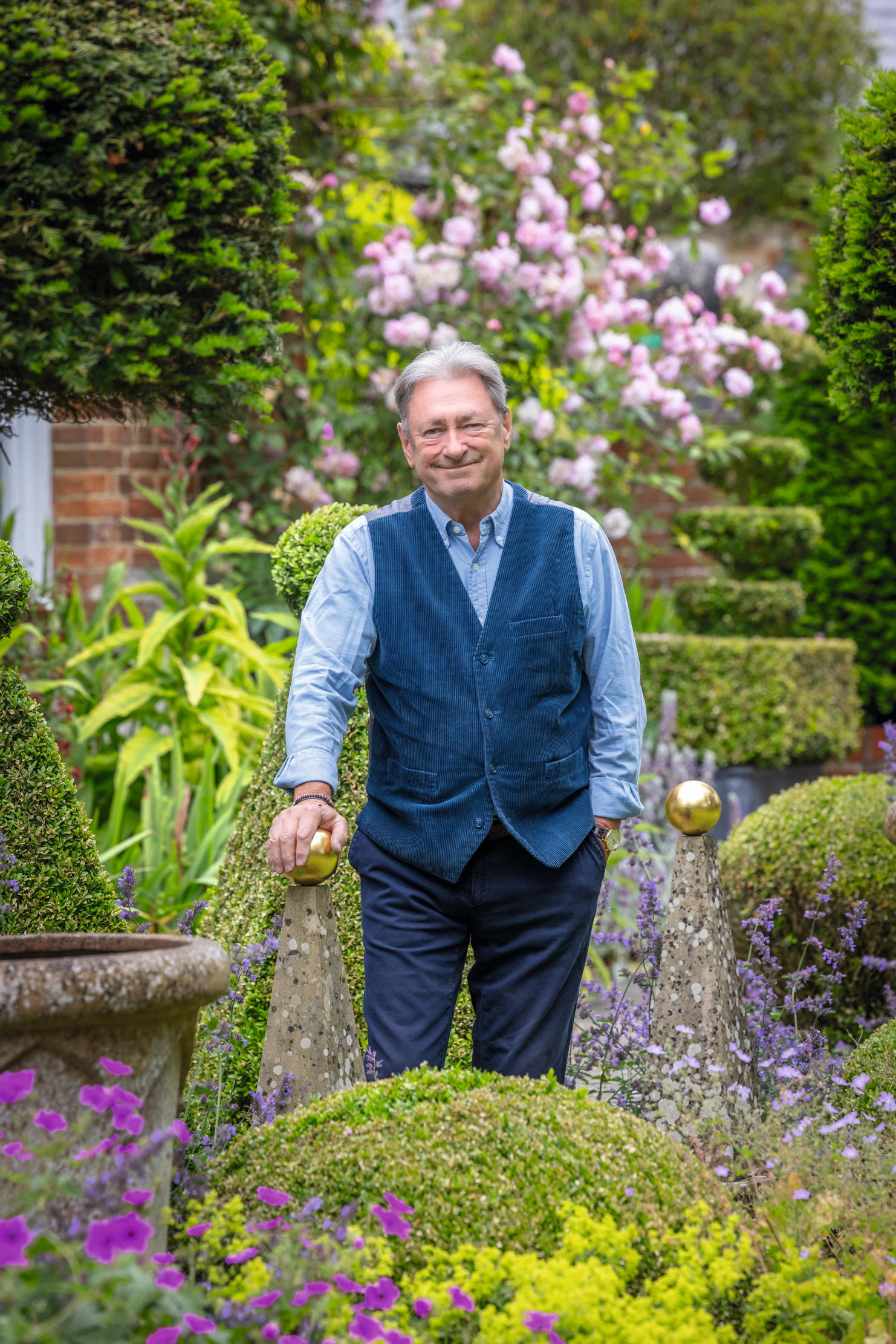
‘I cannot count on such good fortune indefinitely’
The garden Alan is leaving spans approximately four acres.
Maintaining a space of that scale requires an enormous amount of physical work, planning and ongoing assistance.
Over the years, Alan has been fortunate to have trusted people helping him care for the grounds.
But even managing that help comes with responsibilities of its own.
And although Alan joked that he still thinks of himself as being “40-something,” he is realistic about what the future may bring.
For now, he feels healthy, energetic and capable.
But he knows he cannot assume that will always be the case.
“While I might be hale and hearty at the moment, I cannot count on such good fortune indefinitely,” he explained.
That realisation appears to be at the heart of his decision.
Rather than remaining until maintaining the property becomes impossible — or until health forces him to leave — Alan wants to make the choice himself.
He wants to begin his next chapter while he still has the energy to shape it.
A garden built from almost nothing
What makes the farewell particularly difficult is just how much of Alan himself exists within the garden.
When he first arrived nearly 25 years ago, the landscape was very different from the sanctuary it eventually became.
There was rough grass, fruit trees and a handful of mature specimens.
From that relatively simple beginning, Alan gradually created something extraordinary.
Year after year, he shaped the land with the patience and imagination that made him one of Britain’s most beloved gardening figures.
A meadow emerged.
A wildlife pond was created.
Trees and planting transformed the landscape.
A copse became part of the evolving garden.
But what grew there was far more than flowers and trees.
A family grew there too.
‘My eyes are full of tears’
For Alan, the garden became a backdrop to some of the most important chapters of his life.
It watched his children grow.
Later, it echoed with the sounds of his grandchildren.
Seasons changed.
Plants matured.
Family life unfolded around them.
And as Alan attempted to put those memories into words, the emotion became impossible to hide.
He recalled the words associated with the late Queen Elizabeth II:
“Grief is the price we pay for love.”
It was a sentiment that seemed particularly meaningful as he confronted the loss of a place he had loved so deeply.
“I cannot imagine ever loving a garden as much as the one I am leaving,” Alan admitted.
He reflected on how it had “seen my children grow up and echoed to the sounds of grandchildren.”
Then came perhaps his most vulnerable admission.
As he wrote his farewell, Alan confessed that his “eyes are full of tears.”
For someone who has spent decades speaking with warmth and enthusiasm about gardens, those words reveal just how deeply personal this departure really is.
This isn’t simply about selling property.
It is about leaving behind a living archive of nearly 25 years of family life.
Why Alan refuses to wait until he is ‘forced out’
There is, however, something quietly determined behind Alan’s decision.
He is not waiting for life to make the choice for him.
At 77, he remains active and passionate about gardening, and he wants to use that energy while he still has it.
That is why he has chosen to downsize now.
His next garden is expected to cover around an acre and a half — considerably smaller than the approximately four acres he has been caring for in Hampshire, but still large enough for him to create something meaningful.
And importantly, Alan believes it will eventually be manageable enough for him to look after largely by himself.
Rather than seeing the move purely as an ending, he is trying to view it as an opportunity to create again.
A blank canvas.
A new challenge.
Another sanctuary.
‘I would be a heartless soul’ not to find it painful
None of that makes saying goodbye easy.
Alan admitted he would be “a heartless soul” if leaving did not feel like “a wrench.”
In fact, he suggested that saying goodbye to the garden may be even more difficult than leaving the house itself.
For gardeners, that feeling may be instantly understandable.
A house contains memories.
But a garden changes alongside the people who live with it.
Trees planted decades earlier grow taller.
Small plants become established borders.
Children who once played there return years later with children of their own.
Every corner can carry a memory that cannot simply be packed into a moving box.
Alan’s garden has been shaped by almost a quarter-century of his life.
Walking away means entrusting all of that to someone new.
One final chapter — and the beginning of another
There is sadness in Alan’s farewell, but there is no sense that he is giving up.
Far from it.
He still has plans.
He still has ideas.
And most importantly, he still wants to garden.
The new, smaller plot offers him the chance to start again while he still has the strength and enthusiasm to create something from the ground up.
He knows the new garden may never replace the one he is leaving behind.
How could it?
Some places become inseparable from particular chapters of our lives.
But Alan also knows that gardens are, by their very nature, about change.
Plants grow.
Seasons turn.
Old things disappear and new life emerges.
Perhaps that is why, even through the tears, he was able to end his farewell with hope.
“But I will recover,” Alan wrote.
“The new garden will become my next sanctuary.”
After almost 25 years, Alan Titchmarsh is closing the gate on one of the most treasured gardens of his life.
Not because he has stopped loving it.
But because he wants the freedom to choose when to say goodbye — before circumstances make that decision for him.
And as he prepares to create another garden from scratch, one thing remains certain.
He may be leaving behind the land he lovingly shaped for nearly a quarter of a century.
But he is not leaving gardening behind.


