
The parliamentary debate regarding the murder of 18-year-old Henry Nowak and the subsequent police response has devolved into a highly charged and acrimonious dispute, with a Sikh Labour MP accusing right-wing factions of weaponizing the tragedy to attack his religious community.
The emotional session required direct intervention from the Speaker of the House to restore order as lawmakers clashed over race, policing, and religious freedom.
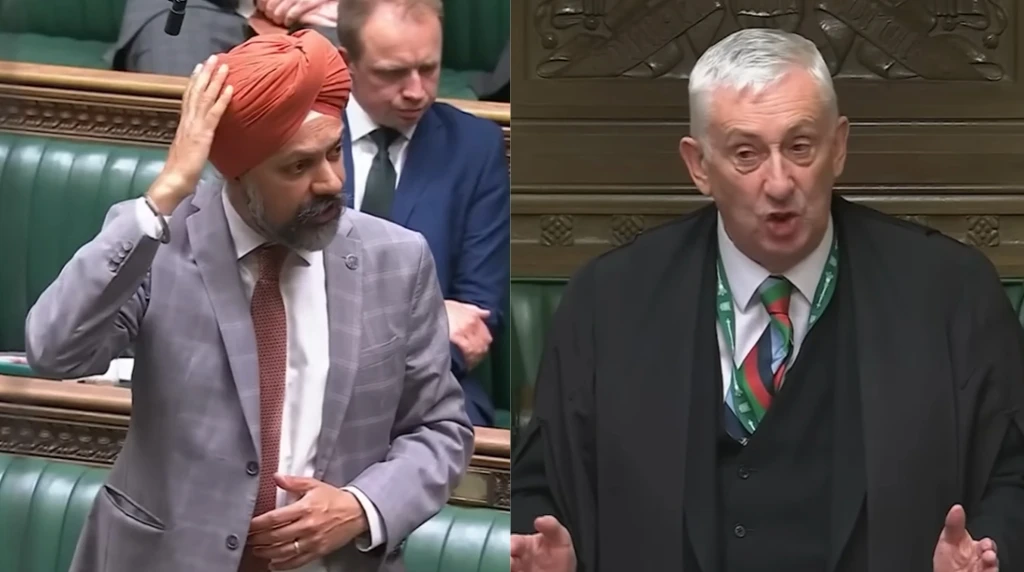
Accusations of Scapegoating
Addressing the House of Commons, an unnamed Sikh Labour MP began by expressing deep sorrow for the Nowak family. He explicitly condemned the responding police officers for “wrongly handcuffing Henry” and “believing the lies of the violent murderer,” stating the police stripped the dying teenager of his dignity.
However, the MP quickly shifted his focus to the political aftermath. He launched a blistering attack on “the likes of Reform, Restore, and the far right,” accusing them of politicizing the victim’s pain to scapegoat the entire Sikh community.
The MP specifically condemned growing conservative demands to ban the Kirpan—a ceremonial dagger carried by baptized Sikhs—noting that while the killer was carrying one, it was not the weapon used in the fatal attack.
“They’ve decided to scapegoat and throw under the bus an entire community based on the actions of one violent murderer,” the MP declared.
Speaker Intervenes During “History Lesson”
The debate grew highly antagonistic, prompting the Speaker of the House to interrupt the MP and formally reprimand lawmakers for pointing and shouting across the chamber. “I don’t expect to be pointing at each other and attacking each other,” the Speaker warned, demanding an orderly and respectful debate.
Resuming his speech, the MP delivered a “history lesson,” reminding the chamber that hundreds of thousands of Sikh soldiers fought and died alongside British troops in both World Wars while proudly wearing the Kirpan. He asked the Home Secretary for reassurances that the religious freedoms of the Sikh community—who he stated are “horrified and ashamed” by the murder—would be protected.
The Home Secretary’s Plea for Calm
In her response, the Home Secretary sought to rapidly de-escalate the chamber. She confirmed the government’s commitment to religious freedom, firmly stating, “We are not a country that collectively punishes an entire group of people for the actions of individuals.”
She pleaded with lawmakers to lower the temperature of the debate, reminding them that the Nowak family is likely watching. “The way we conduct ourselves in this place can of course be passionate, but must not result in name-calling,” she warned, explicitly rejecting the “politicization of this murder.”
The exchange further highlighted the intense political polarization gripping Parliament. The Sikh MP’s defense of his community stood in stark contrast to an earlier, fiery speech by Conservative MP Robert Jenrick, who utilized the same debate to condemn the police’s “anti-racism agenda” and demand the Home Secretary formally declare that “white lives matter.”


