
When it comes to what constitutes a “mind-bending movie,” it’s tempting to think about something along the lines of a Wachowski Sisters joint like The Matrix, or a contemporary genre-breaking show like Beef. Worse yet, sometimes something “mind-blowing” — that is, in the most banal sense of the term — can be mistaken for “mind-bending” cinema or television if the special effects budget for the project just happens to be unabashedly astronomical. (I’m looking at you, Michael Bay, and your Transformers franchise). But despite these misinterpretations, “mind-bending” can also be the most perfect of descriptors, almost eloquent in its miraculous simplicity. And in the rarest of rare moments, that string of divine hours in our digital binge-inducing smorgasbord, “mind-bending” can be era-defining.
Inspired by Gadd’s own story, Netflix’s Baby Reindeer chronicled the comedian-turned-actor’s years-long experience as a stalking victim at the hands of an obsessed middle-aged woman. No one predicted it would be a breakout hit that would go on to beat gargantuan odds. It swept up nearly a dozen Emmy nominations in 2024 — a big deal for a miniseries centered on several oft-taboo complexities. It highlighted male sexual identity, the ramifications of childhood sexual abuse on men later in life, the insidious nature of nontraditional violence at the hands of those who don’t fit the traditional predatorial archetype, the multifaceted, liminal nature of mental health, and much, much more.
Despite Gadd’s stratospheric rise following the show’s release, Baby Reindeer‘s success had the distinct possibility of standing in the Scottish performer’s own way, a creature capable of sowing crippling self-doubt in its creator. Luckily, his 2026 sophomore effort, HBO’s six-episode gut punch Half Man, proves that Gadd’s approach to storytelling is no mere fluke. Thanks to the series’ (and Gadd’s) further exploration of the male psyche in wholly original ways, it’s a mind-bender — and a bingeable one at that.
‘Half Man’ Is a Bingeable Show That’s More Than the Sum of Its Parts
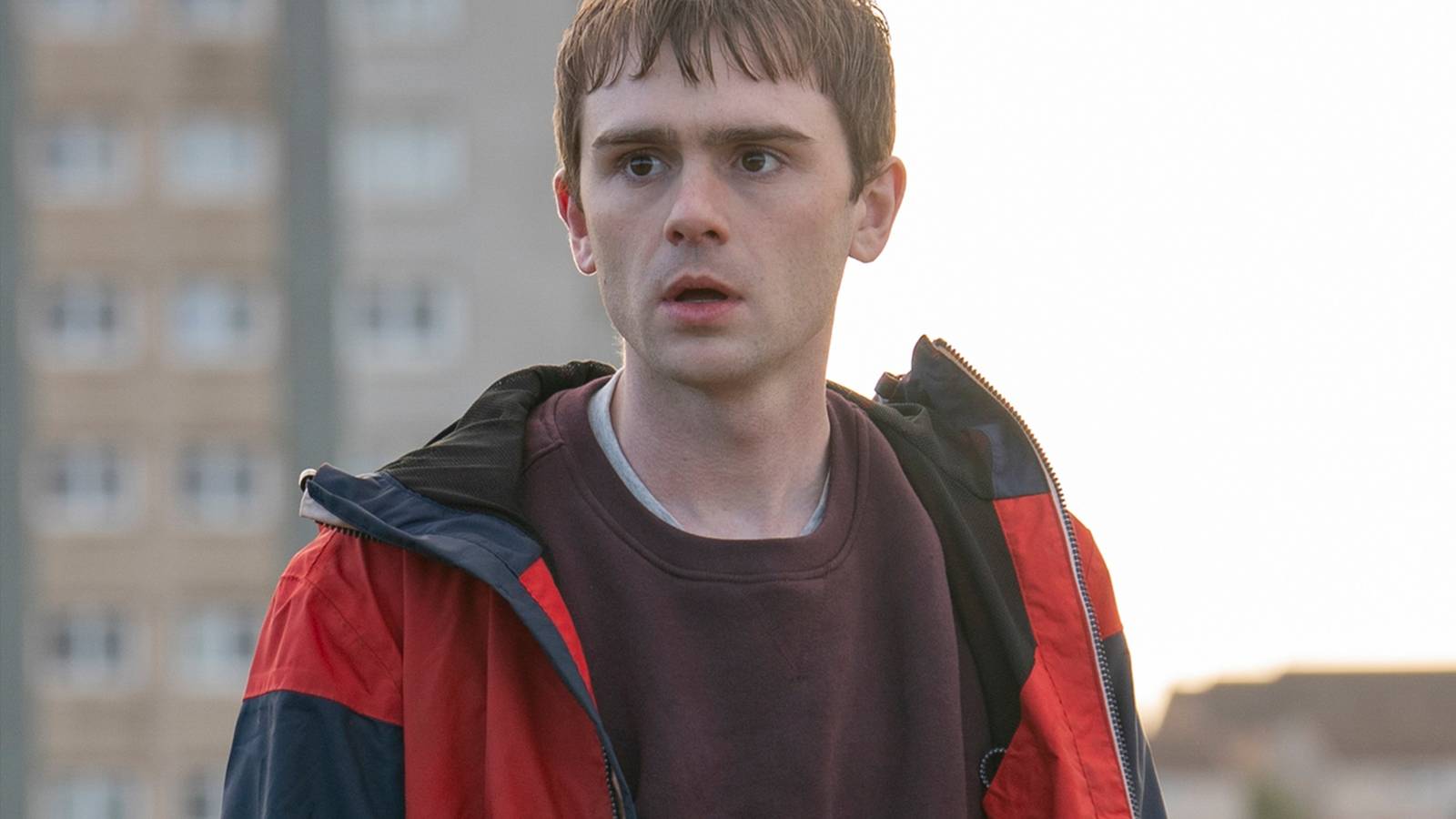
Set in Glasgow over the course of four decades, Half Man follows the relationship between Niall (Jamie Bell), a man consumed by self-loathing over his homosexuality and failed potential. The series showcases his psychopathically violent “brother” Ruben (played by Gadd, who got extremely ripped for the role). Half Man uses Niall’s wedding as a present-day framing device, clueing viewers into the psychosexual underpinnings between the show’s two main characters, who have been estranged for reasons unknown. The uneasy feeling that someone won’t make it through in one piece (or even alive) by the end of the day is almost a foregone conclusion.
From there, the story is told in flashbacks. It begins with Niall’s adolescence, when Ruben fully enters his life as his idol and his demon whisperer. In the hands of a more conventional storyteller, Niall would be cast as a tormented angel, and Ruben would be the almost pathologically murder-prone ne’er-do-well, but Gadd is far more clever than that. Without falling back on damaging canards or tropes, the show has Bell’s character start as a “Bambi” — the cruel nickname his homophobic classmates give him — but as he grows older, the story shows Ruben resorting to performative hypermasculinity and unspeakable brutality to, in his own way, protect and engender Niall. Instead, this backfires, giving Niall an excuse to constantly self-destruct.”

He pointedly deludes himself into thinking his chemsex with other men isn’t obvious; his own mother, a lesbian, repeatedly points out that while the world’s views on the LGBTQ community have changed, Niall’s are out of touch to the point of nihilistic absurdity. As for Ruben, his emanating rage is as lethal as plutonium, but it’s a weapon he wields at the unasked-for behest of those he’s most loyal to; his weakness is his desperation to connect with others deeply, afraid of the pitfalls of loneliness. Through Niall’s eyes, especially when observing Ruben, we see how a patriarchal world can reward those who espouse the most toxic strains of masculinity, even when their anger is enough to scar others physically and psychologically. Their performances make Half Man a must-watch for the ages.
As a title, Half Man might have many meanings, the most obvious being that Niall and Ruben are embodiments of the superego and the id, but if that were the case, it wouldn’t be nearly as impactful. Instead, it’s a cautionary tale of what happens when toxic masculinity splits itself in half, and what happens when its collision course to wholeness ultimately, spectacularly detonates.


