
In the misty hills of Donegal, where the rugged Atlantic coastline meets ancient Gaelic traditions, a profound farewell unfolded on April 17, 2026. The funeral of Moya Brennan, the iconic “First Lady of Celtic Music” and lead voice of Clannad, drew hundreds to St Patrick’s Church in Meenaweal, near Crolly. Moya, who passed away peacefully at home on April 13 at the age of 73 after battling pulmonary fibrosis, left behind a legacy that blended ethereal harp melodies with the soul of Ireland’s Gaeltacht.
The atmosphere inside the small stone church was one of quiet respect, love, and deep collective emotion. Wicker coffin adorned with symbols of her life—a harp, bodhrán drum, family photos, and a Donegal GAA jersey—the service overflowed with mourners spilling into tents outside equipped with loudspeakers. Among the attendees were global music legends: U2’s Bono, The Edge, Adam Clayton, and Larry Mullen Jr.; The Corrs’ Andrea Corr; Daniel O’Donnell and his wife Majella; and other Irish stars. Yet all eyes turned toward one figure whose presence alone spoke volumes: Enya, Moya’s reclusive younger sister, making a rare public appearance after years out of the spotlight.
Enya (Eithne Pádraigín Ní Bhraonáin), 64, shielded her eyes with dark sunglasses and wrapped herself in a black coat with a silver brooch. Supported by family members, she watched as her sister’s coffin was carried in. The Brennan siblings—bound by music from their early days at Leo’s Tavern in Gweedore—had shared a bond forged in harmony. Enya had briefly been part of Clannad before launching her solo career, which made her one of the world’s best-selling artists with multi-platinum albums like *Watermark* and *Shepherd Moons*. But on this day, the focus was on saying goodbye to their eldest sister, the trailblazer who brought Gaelic lyrics to global charts.
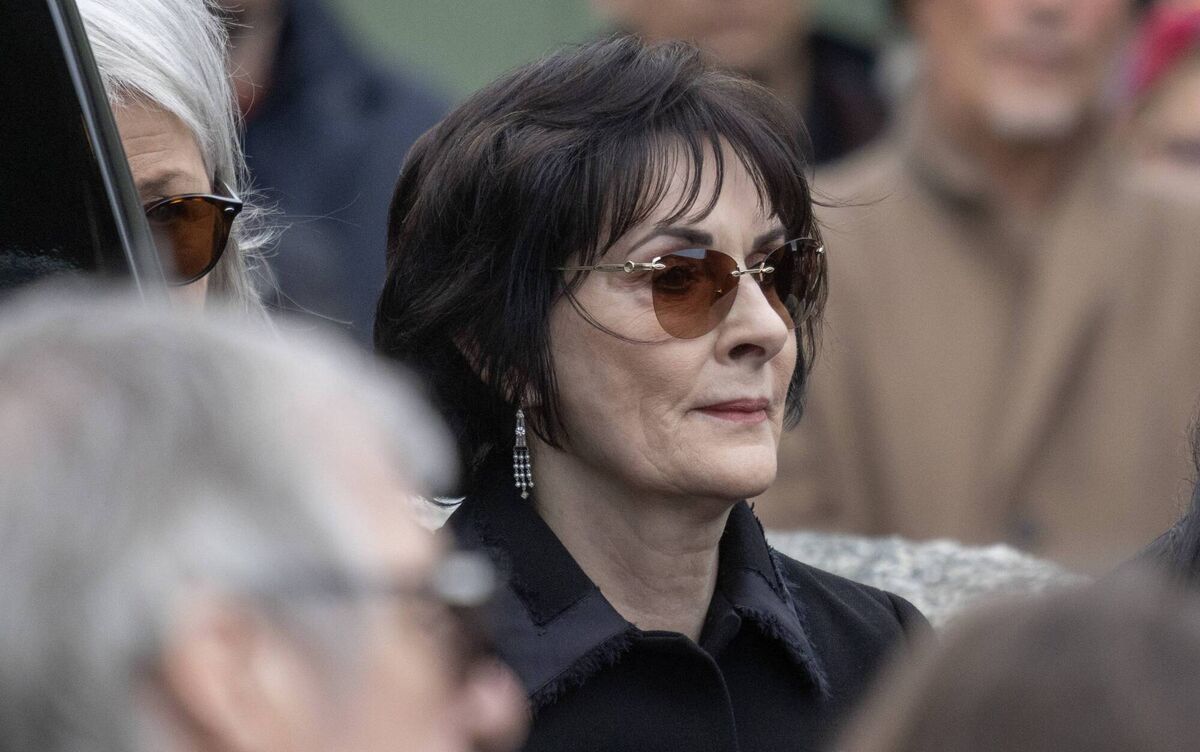
Fr Brian Ó Fearraigh captured the mood in his homily, noting that when Moya died, “it seemed as if a sacred silence had descended.” He described her harp standing vigil and her voice as an instrument of peace that crossed boundaries, singing for popes, presidents, and everyday folk alike. Musical tributes filled the bilingual service: Daniel O’Donnell performed *Here I Am Lord*, while Moya’s brothers Pól and Ciarán joined harpist Cormac De Barra for *Eleanor Pluckett*. Moya’s own recordings, including *Peacemaker* featuring her young son’s voice and *Perfect Time* (performed live for Pope John Paul II), played at key moments. President Catherine Connolly and Taoiseach Micheál Martin sent representatives.
The gathering embodied reverence for a woman who sold millions of records, won Grammys, and popularized Celtic music worldwide through Clannad hits like the *Harry’s Game* theme. Tributes poured in beforehand, with Enya issuing a rare public statement: “It is with a deep and terrible sadness that I must announce the death of my beloved sister, Máire. Not only was she my sister, she was a dear and close friend.” She requested privacy, true to her famously private nature.
Then, everything seemed to change completely.
As the service reached a poignant lull, Enya stepped forward. The reclusive artist, known more for her layered, otherworldly studio vocals than public speaking, broke her silence in a moment few expected. Witnesses described the shift as palpable—the gentle murmurs and sniffles gave way to absolute stillness. Enya’s voice, soft yet resonant like the opening notes of one of her signature tracks, filled the church. She spoke not in grand oration but in trembling, intimate words that carried the weight of shared childhoods in the Donegal Gaeltacht, late-night harmonies, and the unbreakable sisterly bond that transcended fame.
Accounts from those present vary slightly in exact wording—such moments transcend verbatim recall—but the essence was clear: Enya reflected on Moya as the guiding light who encouraged her own musical path, the big sister whose voice first enchanted the world and whose quiet strength sustained the family through triumphs and trials. She spoke of final goodbyes whispered at the bedside, of melodies that would echo eternally, and of a love deeper than any spotlight. “Some bonds,” she reportedly whispered, her voice catching, “are never broken… even when the song ends.”
The entire mood of the funeral shifted. What had been a solemn yet celebratory gathering of shared memories transformed into stunned silence. Heads bowed deeper; tears flowed more freely. Bono and other luminaries sat motionless, the weight of the words hanging in the air like a held note. For a woman who had sold her music through mystery and minimal public exposure, Enya’s vulnerability humanized the legend. The church, already heavy with emotion, seemed to hold its breath. One attendee later told reporters it felt as if “the music itself paused in reverence, just as it had when Moya passed.”
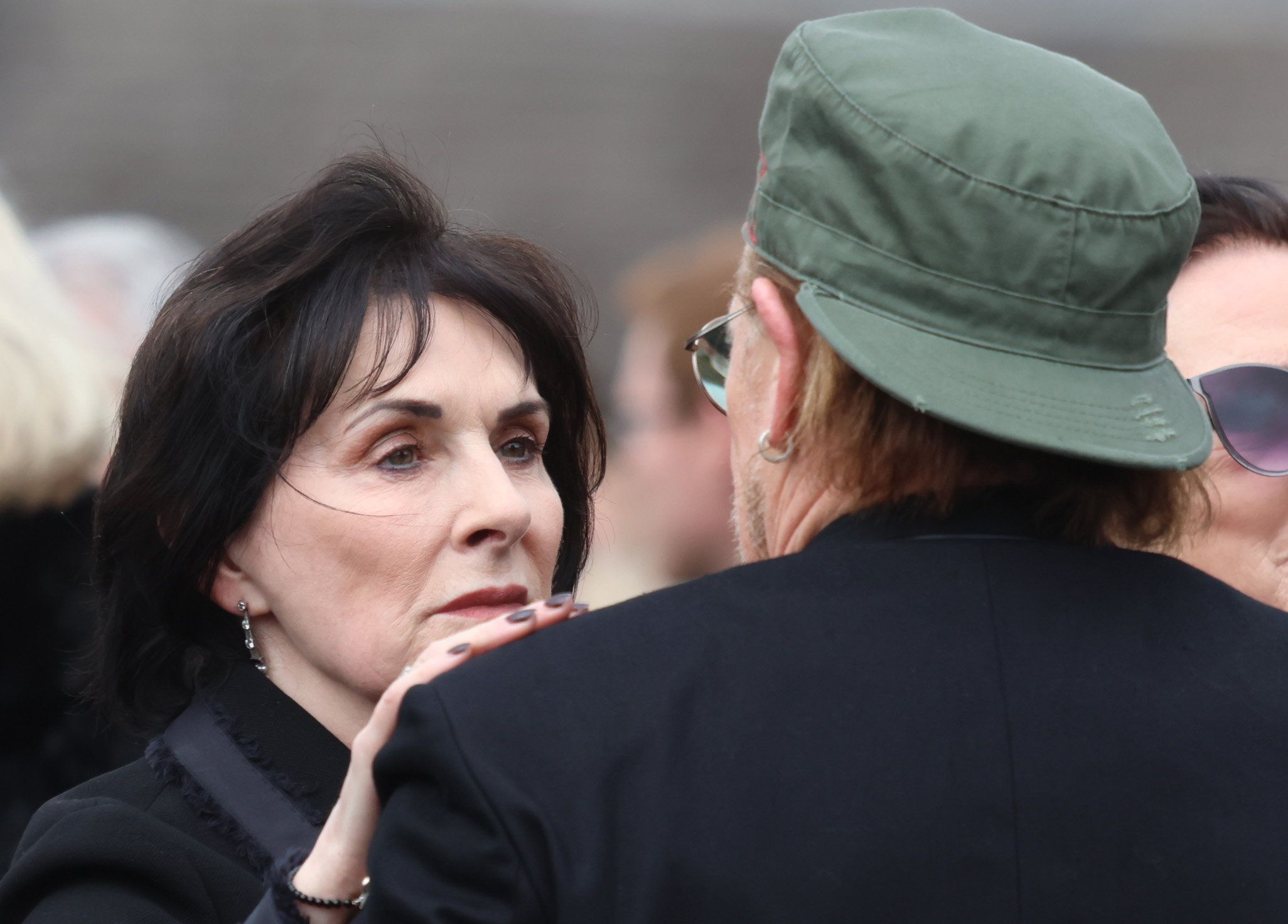
This rare glimpse into Enya’s grief resonated far beyond Donegal. Clips and descriptions circulated rapidly online, with fans calling it a “devastating yet beautiful” tribute. YouTube videos with titles like “Enya Breaks Silence” and “I Can’t Go On” captured the global outpouring, amplifying the moment’s intimacy. Her words underscored themes of family, legacy, and the quiet power of Irish music traditions—values the Brennan family embodied from their roots in Gweedore.
Moya’s life was one of pioneering spirit. Born Máire Philomena Ní Bhraonáin in 1952, she led Clannad from the 1970s, blending folk with pop and new-age elements. The band’s success paved the way for Enya’s solo stardom and influenced generations. In later years, despite health challenges, Moya continued performing, mentoring young artists at open mic nights, and cherishing her roles as wife to Tim Jarvis and mother to Aisling and Paul. Her philanthropy and faith shone through, as noted in tributes emphasizing her as a “woman of music, melody, motherhood, and mission.”
Following the church service, mourners processed to Magheragallon Cemetery, overlooking the beach, for burial. The day’s blend of sorrow and song reflected Moya’s own wishes, with performances chosen by her in advance.
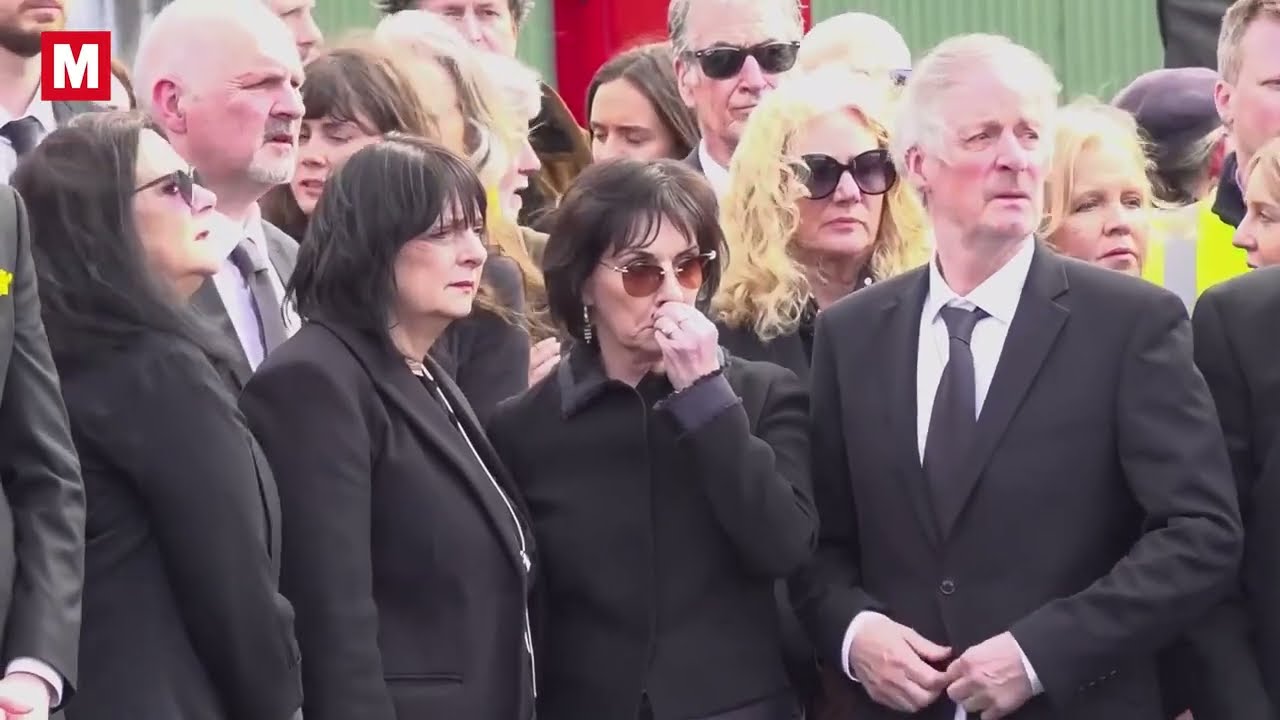
Enya’s intervention, though brief, became the emotional crescendo. In an industry where public figures often maintain distance, her willingness to share raw pain amid legends like Bono highlighted authenticity. It reminded everyone that behind the ethereal voices and chart-topping success lay profound human connections. As one mourner reflected, the silence that followed Enya’s words was not empty but filled with the very essence of what Moya represented: enduring love, cultural pride, and the timeless pull of home.
In the days since, reflections on the funeral have celebrated not just Moya’s artistry but the family’s resilience. Enya has returned to her private world, but her words linger as a final, transformative harmony in her sister’s farewell. In Donegal’s windswept beauty, where music has always been a language of the soul, everything indeed changed in that moment—turning collective mourning into a deeper, shared understanding of loss, legacy, and the songs that never truly fade.
Moya Brennan’s voice may have fallen silent, but through Enya and the countless artists she inspired, it continues to echo across the world.


