
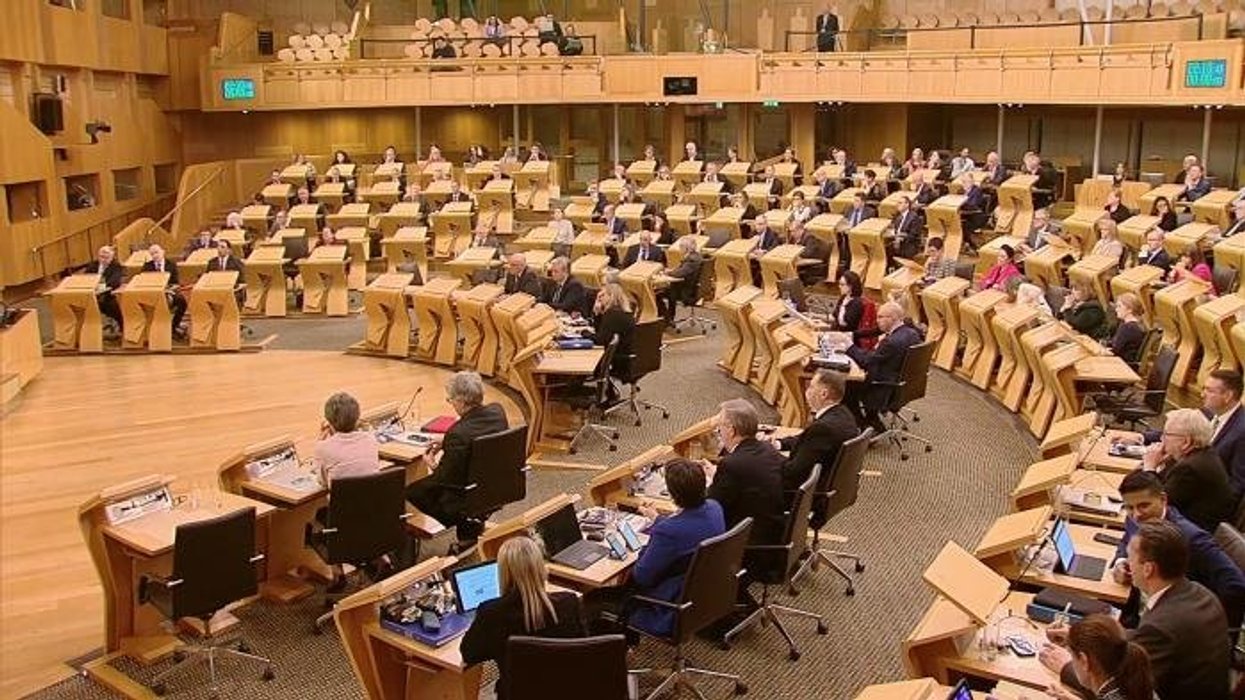
Following one of the most emotionally charged issues facing parliamentarians in the history of Scotland’s devolved parliament, MSPs have rejected “the toughest and most comprehensively safeguarded assisted dying bill in the world”.
Tonight’s vote marks the third time a Scottish assisted dying bill has failed in 16 years.
The rare free vote spurred internal division across all parties sitting in Holyrood, ultimately coming together to decree the bill’s rejection with 57 votes in support and 69 against, with one abstention.
The 10pm vote is the third time the Scottish Parliament has attempted to legislate for assisted dying north of the Border, with supporters arguing the modern bill considers more safeguards with “cast iron protections” against coercion and supporting healthcare professionals.
Applicants would need to prove mental capacity to decide for themselves, facing a life expectancy of fewer than six months and aged 18 or older.
Approaching the Stage 3 vote, the bill’s architect, Scottish Liberal Democrat MSP Liam McArthur, said he sought “a robust and well safeguarded law” to provide terminally ill Scots an assisted death “if they wanted one”.
Moving the motion after 6pm, he began by noting “a significant moment for the Parliament”.
He acknowledged the 175 amendments from colleagues on the benches, declaring: “I might have introduced this bill, but it’s Parliament’s bill now.”

| GETTY
“Throughout this process public support has been unwavering,” he said, confident the bill has “the overwhelming support of a significant majority of Scots”.
He paid early tribute to Health Secretary Neil Gray, “a good friend and someone I respect enormously”, who normally would have been leading the debate from the Government front bench.
However, a Tuesday communication from the Scottish Government revealed Mr Gray had been hospitalised the night before.
In a released statement, Mr Gray said he was “sorry and frustrated” to be missing the critical Stage 3 debate and vote.

He said: “Whilst I am pleased to now be discharged, I am sorry and frustrated to be missing today’s debates in Parliament.”
He reminded colleagues of the “sensitivity” and “complexity” of the responsibility tied up in the vote and stated his intention to vote through proxy.
Although the topic has lingered for 16 years, this bill has divided MSP opinions since first being introduced in March 2024 and saw pressure from both sides of the debate as charities and organisations fought long campaigns for and against legalised assisted dying in Scotland.
Of the 175 accepted amendments, 83 were submitted by MSPs who initially stood against the bill at Stage 1.
More steadfast opponents to assisted dying have vocalised fears over the impact of assisted dying on disabled and vulnerable groups throughout the bill’s passage through parliament.
Dr Gordon McDonald, chief executive of the campaign group Care Not Killing, called the bill “dangerous” and cautioned it as being “inconsistent and too risky”.
“If MSPs have any doubts at all,” he said, “then they should vote against this Bill”.
“People who are vulnerable will be put at risk, perhaps because of coercion or because they’re depressed or they feel they’re a burden on their friends and their family and their carers,” he claimed.
Chief among the concerns of members opposing the bill is the temporary removal of clinician protections at Stage 2, due to requiring a Section 104 signed off by the UK Government, who so far has remained neutral on the Scottish issue.
Equally, early discussions of familial coercion gave way to broader concerns about self-coercion: when a loved one convinces themself that an early death would be the best outcome for their family, rather than choosing an early death to ensure a good death.
The overwhelming emotional and moral entanglement of the subject matter ensured the assisted dying bill was introduced as a free vote, permitting MSPs to cast a vote based on personal perspective instead of adhering to a party line.
The short list of legislation that has enabled free voting since 1999 includes the ban on fox hunting, legalising same-sex marriage and two previous votes that ultimately rejected assisted dying.
SNP MSP Margo MacDonald introduced the End of Life Assistance Bill in 2010, but it suffered a significant defeat at Stage 1 by 85 votes to 16.
Motivated by her own life living with Parkinson’s, the Govan MSP died in 2014.
Scottish Greens leader Patrick Harvie championed a second assisted dying bill in 2015, motivated by the death of the previous applicant.
That too was defeated at Stage 1, albeit by a smaller margin: 82 to 36.
Liam McArthur’s bill was the third attempt to fall to a parliamentary vote, but the first to reach the final Stage 3 vote, and by the narrowest margin.
In February, Jersey passed its own assisted dying bill at the same time as the Welsh Senedd voted to incorporate Labour MP Kim Leadbeater’s Westminster bill if passed into law.A Scottish Government spokesperson said:
A Scottish Government spokesman said: “The Scottish Government notes the decision of the Scottish Parliament not to pass the Assisted Dying for Terminally Ill Adults (Scotland) Bill. As this is a Member’s Bill, the Scottish Government maintained a neutral position throughout, while providing detailed technical, legal and financial commentary to ensure the Bill would be workable in practice if passed, and working with the UK government in relation to legislative competency issues.
“The Scottish Government remains committed to ensuring that everyone in Scotland who needs it can access well-coordinated, compassionate and high-quality palliative and end of life care.”


