

THIS time four years ago, I was sipping a glass of champagne and savouring every precious swallow – to the obvious disapproval of the waitress.
The reason she was judging me? Because I was five months pregnant with my first child.


Even though I was guilty of breaking the NHS’ current zero-alcohol guidance, I told myself that mums-to-be, my own included, have been drinking alcohol in moderation for most of history without issues – right?
This is the reality of alcohol addiction.
I wasn’t completely stupid – I had reduced my years-long, bottle-a-night habit down to no alcohol whatsoever during that crucial first trimester.
After that, I stuck to a maximum of two small glasses.
But the fact that I still drank at all was evidence of how tight its chokehold was on me.
I’m now six months pregnant with my second baby and relieved to report both that I’m sober and that it’s been easy this time, thanks to the so-called “Ozempic for problem drinkers”.
After I give birth, I will be capable of enjoying a glass of wine here and there without it ever turning into a bender.
This is thanks to a woefully underprescribed medication that fixed my dependence on alcohol last year.
It turned me into something I’d always wished I could be – a moderate, social drinker.
If you had told me during the depths of my worst drinking episodes that one day I would be able to enjoy half a glass of wine and tip the dregs down the sink, I would not have believed you.
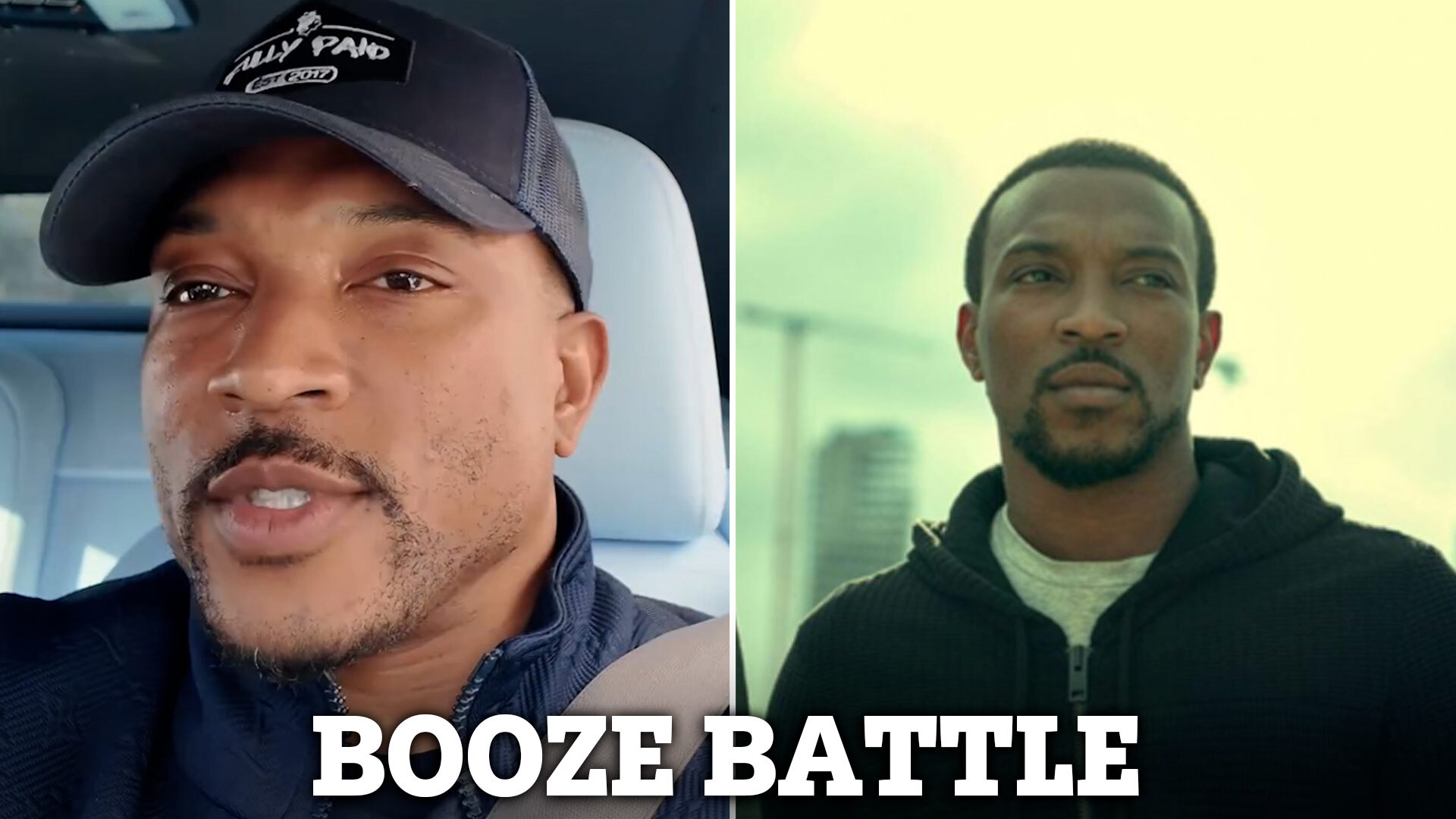
Watch as Ashley Walters admits he was a functioning alcoholic on Top Boy
I knew I had a dysfunctional relationship with alcohol throughout my twenties and thirties.
I also knew (or so I thought) that I would have to give it up someday.
You either drink yourself to death – I was led to believe – or you join a 12-step programme and aim for lifelong abstinence.


Neither appealed to me, so I remained stuck in a cycle of throwing back that bottle of wine a night or abstaining completely for weeks at a time.
What I did not know was that there could be a middle way – a drug called naltrexone.
It eliminates cravings by blocking the brain’s opioid receptors, making alcohol less pleasurable and curbing the desire to drink.
This is much like how Ozempic numbs food cravings by promoting feelings of fullness.
The solution is so absurdly simple it should be the first line of defence for anyone struggling with addiction.
And yet, until recently, most GPs had not seemed to have heard of it.
Within a week of me trying it in early 2024, the desire to drink had vanished entirely.
When I fell pregnant earlier this year, there was no sense of dread over the prospect of abstaining entirely
Annabel Fenwick Elliott
Now, especially given I’m pregnant, wine is rarely in my house or on my mind.
Before, at least on paper, I would have been classed as an alcoholic. Not that you would have guessed it, for I was a highly accomplished wreck head.
At university I was affectionately known as the “designated drunk driver”, the only person able to drive us all home without incident even under the influence.
I feel extremely guilty about it.
It was the reason I sold my car when I left – because I knew it was wrong and didn’t want the temptation.
My alcohol tolerance was high. I did not slur my words or wobble when I walked.
I flew under the radar of friends and family who might have been worried about my habits.


I could be in a full-blown state of blackout and still be able to engage in seemingly sober conversation, despite recalling nothing in the morning.
What drove me to drink was how painful I often found mundane conversation.
As someone with severe ADHD, the chatter inside my head has always been exhausting.
I can not stand people who talk too slowly, or engage in small talk, so socialising is painful.
Unless, that is, I have stupefied myself to sufficient levels with alcohol.
The volume of chatter in my head is deafening, too.
When I’m home alone (so particularly during lockdown), I was doing the majority of my drinking with no witnesses. It made laundry less boring, and sleep came more easily.
Inevitably, I would start tucking into the wine earlier and earlier in the day, until it started interfering too much with my life.
At this point, I would cut it out entirely for various lengths of time and “white-knuckle” my way through.
I did eye up programmes such as Alcoholics Anonymous a few times, but as a staunch atheist, I could never have taken seriously the prospect of praying, chanting mantras or “surrendering to a higher power”.
Then I heard about naltrexone, which has a clinical success rate of 85 per cent at getting users to drastically cut back or eliminate alcohol use (of those who go to AA, 24 per cent were sober after one to five years, dropping to 13 per cent by 10 years, a 2014 study by the organisation showed).
It has few side effects — for me, there were none — and does not induce awful symptoms when mixed with booze (like drug Antabuse, which is seldom used today).
At £100 for a one-month supply — around £3 a day — it’s relatively affordable, too.
Good luck getting it on the NHS, though.
Naltrexone is classed as an off-label medication for alcohol addiction, which means GPs do not have the budget to prescribe it.
I got mine from Dr Janey Merron at the Sinclair Method UK Ltd, a clinic that specialises in administering it.
Dr Merron left the NHS to go private out of sheer frustration because she saw how effective the drug could be and wanted to help more patients.
Packages at this clinic cost from £345 for the phone consultation, the prescriptions and three months of counselling.
The fact that this is not being widely prescribed by the NHS is a travesty, particularly given that alcohol-related deaths have jumped to a record high in the UK, according to the Office for National Statistics.

What is naltrexone?
Alcohol also plays a part in nearly half of all violent crimes worldwide, meaning society at large would benefit enormously from this medication being better known.
First approved in 1984, the drug temporarily blocks the dopamine rush we get from alcohol and other substances.
It can also destroy the “reward loop” we get from behaviours, including overeating (which is why it is added to some weight-loss medications) or hitting the casino (naltrexone is approved by the NHS to treat gambling addicts).
It was five years after the drug hit the market that Dr John David Sinclair, an addiction specialist at the Finnish Foundation for Alcohol Studies, recognised its potential in treating alcoholics, and The Sinclair Method was born.
How will drinking alcohol could affect an unborn baby
AVOIDING alcohol during pregnancy is always the safest option.
This is because there is no proven safe amount of alcohol a woman can drink during pregnancy, according to the NHS.
If you do choose to drink, it is safest not to drink more than 14 units per week and best to spread your drinks evenly during the week
Alcohol can pass through the placenta to your baby.
The more you drink the greater is the risk of harm to your baby.
Drinking heavily during pregnancy can:
- Increase your chances of miscarriage
- Affect the way your baby develops in the uterus and, in particular, the way your baby’s brain develops
- Affect the way your baby grows in the uterus by causing the placenta not to work as well as it should – this is known as fetal growth restriction (for more information, see the RCOG patient information Having a small baby)
- Increase the risk of a stillbirth
- Increase the risk of premature labour
- make your baby more prone to illness in infancy and in childhood, and also as an adult
- Cause fetal alcohol spectrum disorder (FASD) or fetal alcohol syndrome (FAS) – see below for more information on both FASD and FAS.
The more you drink, the more your baby’s growth will be affected and the less healthy your baby will be.
However, if you cut down or stop drinking altogether, your baby will start to grow at a normal rate.
Stopping drinking at any point during pregnancy can be beneficial.
However, in some instances, the effects of heavy drinking on your baby cannot be reversed.
Source: The Royal College of Obstetricians and Gynaecologists (RCOG)

Now I have to force wine down
When on The Sinclair Method, I was told to keep drinking, which is contrary to almost every other treatment method out there.
But I had to take naltrexone first, one hour before consumption.
The point is to break the cycle of associating alcohol with pleasure.
I had been compelled to drink because I had learned that it made me feel good through repetition and reinforcement. But naltrexone unravelled that.
I unlearned the association between booze and pleasure.
Naltrexone only lasts eight to 12 hours and does not stop the physical effects of alcohol. I can drink enough to relax, which takes the edge off in social scenarios.
But it kills the moreishness, so one glass is all I feel like drinking.
Within a week, the drug had worked its magic on me.
I was given a 30-day supply on my prescription, but the rest are still sitting in my medicine cabinet.
According to the Sinclair Method, you should take a dose an hour before you drink every time.
When I started, I did this, and it was every evening.
However, I’ve now drunk socially a few times since treatment and have not taken it - the effect was the same, I couldn’t finish my second glass.
I find myself almost forcing the wine down.
On one hand, it is nice to get that dopamine hit again, but on the other, my brain no longer associates the taste with a good response, so it feels bitter on my tongue, much like it did all the way back in my teens when alcohol was still new.
My tolerance has seemingly been reset. And when I fell pregnant earlier this year, there was no sense of dread over the prospect of abstaining entirely.
Of course, taking the pill before you drink still requires willpower, just like turning up to 12-step meetings.
How to spot if your loved one is a functioning alcoholic
A FUNCTIONING alcoholic is someone who drinks heavily but still manages to hold down a job, maintain relationships and appear “in control”.
Experts at The Priory Group warn their behaviour can reveal the truth:
- They can’t drink in moderation but believe they aren’t overdoing it, and often don’t complain of hangovers
- They rationalise alcohol as a “reward” or treat, using any excuse to justify drinking
- They say they need alcohol to relax or socialise, and often drink more than everyone else
- They joke about their drinking but become defensive or irritated if challenged
- They claim drinking expensive alcohol proves they don’t have a problem
- They show mood swings or personality changes once they start drinking
- They may drink secretly, stash bottles in unusual places, or sneak off at odd times
- They take risks such as driving under the influence
- They suffer blackouts or memory gaps after drinking
- They develop a high tolerance, drinking far more than others without seeming drunk
- They experience withdrawal symptoms like nausea, shaking or fatigue when they stop
Some phrases you may also hear people with a drinking problem say include:
- “I’m successful, so how can my drinking be out of control?”
- “I pay my bills, have lots of friends and have a good job.”
- “I only buy expensive alcohol.”
- “I haven’t suffered hardship or damage to my life due to alcohol.”
- “Every one drinks like I do, its normal.”
It can be difficult to broach the topic with a person if they are always defensive, or if the conversation gets out of hand.
The Priory Group says to avoid bringing up the topic when they are drunk.
Try not to appear angry, judgemental or blame, rather, remind them that you are genuinely concerned and would like to support them.
Encourage them to take a screening quiz – “someone struggling with alcoholism may find it hard to accept they have a problem if it’s just coming from your observations,” the Priory says.
The 10-question alcohol use disorders identification test (AUDIT) is recommended by the National Institute for Health and Care Excellence (NICE). A score of above 20 indicates a possible dependency.
Warning note
But I find it infinitely easier to swallow a tablet when I still have good intentions, knowing that for the next eight hours or so, it will be impossible to get that high from drinking.
Dr Merron sees me as a typical patient.
She says: “The majority of the people I treat are high-functioning, high-achieving professionals whose associates would never guess how much they drink.”
She also stresses the importance of therapy during treatment by the Sinclair Method.
While naltrexone cured my drinking problem with astounding speed, I did have to stare down the reality of no longer having a numbing agent for the problems that have always accompanied me.
And I had to find other coping mechanisms.
I socialise far less now, because small talk continues to haunt me. I have swapped wine for podcasts to ease the boredom of laundry.
I am on medication for ADHD and have regular therapy.
Since I first wrote about naltrexone, the clinic I used has been inundated with requests, from an average of 12 per week to hundreds per day.
This is the first step in what I hope will be a revolution in the way alcoholism is treated.
It changed my life immeasurably – and by extension, I’m sure, the future of my children’s. If you are anything like I was, it could well transform yours, too.

What is naltrexone and how do I get it?
THE Sinclair Method (TSM) helps people unlearn addictive behaviours.
“By harnessing a process called ‘pharmacological extinction’, it helps people regain control over alcohol, reducing cravings and harmful drinking without requiring abstinence from day one,” founder Dr John David Sinclair says.
He believes that alcohol dependence is not simply about withdrawal or deprivation – it’s a learned behaviour reinforced by the brain’s opioid system each time it’s consumed.
The breakthrough behind TSM is that by taking an opioid antagonist – such as naltrexone – before drinking, the reinforcement effect is blocked.
“This activates the brain’s extinction mechanism, leading to a gradual but permanent reduction in both cravings and drinking,” Dr Sinclair says.
First approved in 1984, the drug temporarily blocks the dopamine rush we get from alcohol and other substances.
It can also destroy the “reward loop” we get from behaviours, including overeating (which is why it is added to some weight loss medications) or hitting the casino (naltrexone is approved by the NHS to treat gambling addicts).
It was five years after the drug hit the market that Dr Sinclair, an addiction specialist at the Finnish Foundation for Alcohol Studies, recognised its potential in treating alcoholics, and TSM was born.
Naltrexone is usually taken one hour before alcohol consumption. The point is to break the cycle of associating alcohol with pleasure.
It lasts eight to 12 hours and does not stop the physical effects of alcohol, but it kills the moreishness, so one glass is usually enough.
The medication is usually taken alongside therapy and personal development.
It has few side effects and costs about £100 for a month’s supply – around £3 a day.
Unfortunately, while licensed in the UK, it is not currently available on the NHS.
Naltrexone is classed as an off-label medication for alcohol addiction, which means GPs do not have the budget to prescribe it. You can buy it privately.
You can find out how to access treatment on The Sinclair Method UK website. You do not need a GP referral or prescription.
Other treatment providers include Rethink Drink and Wimpole Aesthetics.
If you’re struggling with your alcohol intake, you can also contact your local GP for help, use local support services or make use of the NHS Drink Free Days app to help control your drinking.


